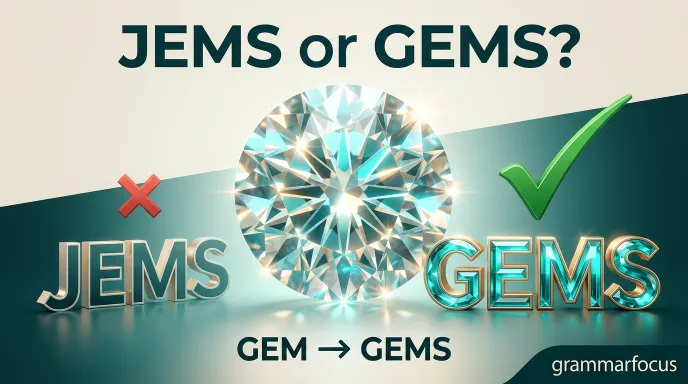
Gems is the correct spelling when you mean valuable or beautiful stones, while jems is usually a misspelling. The word gems is the plural form of gem, which can refer to a precious or semiprecious stone such as a diamond, ruby, sapphire, or emerald.
It can also describe something that is considered especially valuable, beautiful, useful, or excellent.
The spelling can be confusing because the letter g in gems has a soft sound, which may make some writers think the word should begin with j.
In standard English, however, the correct spelling is gems. The form jems is not the standard plural spelling of gem.
You may occasionally see jem or jems in names, usernames, brands, or other special contexts, but these uses do not make it the standard English spelling.
Knowing the difference is useful when writing about jewelry, gemstones, valuable objects, talented people, or things that stand out as particularly good.
This article explains jems vs. gems, including their pronunciation, meaning, origin, spelling, common mistakes, and everyday usage.
Jems or Gems: Quick Answer
Gems is correct; jems is generally incorrect when you mean the plural of gem.
A gem is a precious or semiprecious stone, such as a diamond or ruby. The plural form is gems.
For example:
- Correct: The jewelry box contained several beautiful gems.
- Incorrect: The jewelry box contained several beautiful jems.
The spelling may cause confusion because g before e can have a soft sound similar to the sound represented by j in words such as jam or job.
That sound does not change the spelling, though.
The standard forms are:
Singular: gem
Plural: gems
A useful memory rule is simple:
Gem starts with G, so gems also starts with G.
Gems vs. Jems: Quick Comparison
| Feature | Gems | Jems |
| Standard English spelling | Yes | No |
| Singular form | gem | jem is nonstandard |
| Plural form | gems | jems is generally a misspelling |
| Main meaning | Precious stones or something valuable | No standard meaning as the plural of gem |
| Used in standard writing | Yes | No |
| Recommended form | Gems | Avoid |
The difference between the two forms is only one letter, but gems is the established English spelling.
If you are referring to more than one gem, write gems.
Pronunciation and Word Form
Gems
- US pronunciation: /dʒɛmz/
- UK pronunciation: /dʒɛmz/
- Part of speech: Noun
- Singular: gem
- Plural: gems
Example:
The museum displayed several rare gems.
The g in gem has a soft /dʒ/ sound. The plural ending adds a /z/ sound, giving the pronunciation /dʒɛmz/.
Jems
- US pronunciation: No standard pronunciation as an English plural form
- UK pronunciation: No standard pronunciation as an English plural form
- Part of speech: Nonstandard spelling
- Status: Usually a misspelling of gems
Example:
Jems is often written by mistake when someone means gems.
Because jems is not the standard plural form of gem, it should not be used in ordinary formal English.
Definition and Meaning of Gems
The word gems has several related meanings.
Gems as Precious Stones
The most common meaning refers to valuable stones that are used in jewelry or valued for their beauty.
Examples include:
- Diamonds
- Rubies
- Emeralds
- Sapphires
- Amethysts
For example:
The necklace was decorated with colorful gems.
Here, gems means valuable or decorative stones.
Gems as Valuable or Excellent Things
The word can also be used figuratively.
A person might describe a useful piece of advice as a gem. A beautiful song, a hidden restaurant, or an especially good book could also be called a gem.
For example:
That small bookstore is a hidden gem.
The phrase hidden gem means something excellent or valuable that is not widely known.
In this figurative sense, the word does not refer to an actual stone. Instead, it compares the thing to something rare and valuable.
What Does Jems Mean?
Jems does not have a standard English meaning as the plural of gem.
When writers use jems in ordinary English, they usually intend to write gems.
The error is understandable because the pronunciation of gem begins with the same consonant sound represented by j in many English words.
Still, English spelling is not always based directly on pronunciation.
In this case, the standard spelling begins with g:
gem → gems
Some occurrences of Jem or Jems may be legitimate proper names, surnames, usernames, or brand names. Those special uses are different from using jems as the ordinary plural of gem.
Why Is Gem Spelled With G?
The spelling gem comes from the history of the word rather than from modern pronunciation.
English spelling preserves many patterns from earlier forms of words. Although the g in gem has a soft sound, the letter remains part of the established spelling.
This is similar to other English words in which g before e, i, or y can represent a soft /dʒ/ sound.
For example:
- gem
- gentle
- giant
- general
- gym
The pronunciation can therefore help explain why jems seems plausible, but it does not make that spelling correct.
The same principle applies to the plural:
gem → gems
The initial letter remains g.
The Origin of Gem
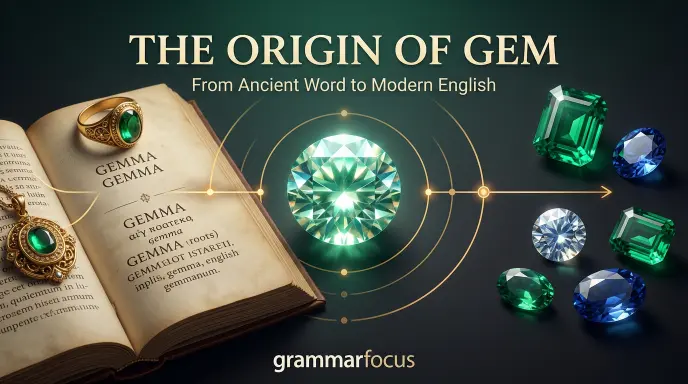
The English word gem has roots in Old French and Latin.
It comes from the Old French gemme, which was derived from Latin gemma. The Latin word referred to a precious stone, jewel, or bud.
The word entered English with its connection to valuable or ornamental stones. Over time, its meaning expanded beyond physical gemstones.
Today, gem can describe both a literal precious stone and something figuratively considered valuable or exceptional.
That broader meaning explains expressions such as:
- a hidden gem
- a rare gem
- a little gem
These expressions use the value of a physical gemstone as a comparison for something special.
The historical development of the word also confirms why the standard English spelling is gem, not jem.
Gem and Gems: Singular vs. Plural
Understanding the singular and plural forms makes this spelling easier.
Gem refers to one stone or one thing described as valuable or excellent.
Gems refers to more than one.
Examples:
- The ring contains a beautiful gem.
- The ring contains several colorful gems.
The spelling does not change internally when the word becomes plural. The normal plural ending -s is added:
gem + s = gems
This is different from words that require a spelling change before becoming plural.
For example:
gem → gems
not:
gem → jems
The initial g stays exactly the same.
British English vs. American English Spelling
There is no British-American spelling difference between gems and jems.
Both British English and American English use gems as the standard plural of gem.
| Usage | British English | American English |
| Singular | gem | gem |
| Plural | gems | gems |
| Incorrect spelling | jems | jems |
| Meaning | Precious or valuable things | Precious or valuable things |
The pronunciation is also essentially the same in both major varieties of English.
Therefore, this is not a case where you need to choose between British and American spelling. Gems is the standard form in both.
Gems in Different Contexts
The word gems can appear in several types of writing.
Jewelry and Fashion
The designer used colorful gems to decorate the necklace.
Here, gems refers to stones used as decoration.
History
The collection contains gems from several ancient cultures.
The word can describe valuable stones found in a historical collection.
Travel
The guide helped visitors discover hidden gems in the city.
In this example, gems is figurative. It refers to special places rather than actual stones.
Books and Media
A few gems were hidden among the older books.
The word can describe particularly valuable or interesting items.
Everyday Conversation
She shared a few gems of advice during the meeting.
Here, gems means especially useful or valuable pieces of advice.
The context tells the reader if gems is being used literally or figuratively.
Which Spelling Should You Use?
When choosing between jems or gems, use gems in standard English writing. It is the correct plural form of gem, if you are writing for an American, British, Canadian, or Australian audience.
Jems should not be used as the ordinary spelling of the plural noun. If you see it in a message, post, comment, or informal text, it is generally a spelling mistake rather than an accepted alternative spelling.
Use “Gems” When You Mean:
- Precious or semiprecious stones: The jeweler displayed several beautiful gems.
- Something highly valuable or special: The museum contains several historical gems.
- An excellent or overlooked person, place, work, or idea: That little café is one of the city’s hidden gems.
- The plural form of gem: She collects colorful gems.
The spelling stays gems in both major varieties of English. There is no standard British-versus-American spelling difference here.
Common Mistakes With Jems and Gems
The most common mistake is replacing the g in gems with j. Because the word begins with a sound that can be associated with the letter j, some writers may spell it as jems.
Mistake 1: Writing “Jems”
❌ The store sells beautiful jems.
✅ The store sells beautiful gems.
The correct spelling is gems.
Mistake 2: Using “Jems” in Formal Writing
❌ These jems were discovered during the excavation.
✅ These gems were discovered during the excavation.
Academic work, business writing, articles, and other formal content should use the standard spelling gems.
Mistake 3: Confusing Sound With Spelling
The pronunciation of gems can make the spelling less obvious because the initial g has a soft sound.
English has many words in which letters do not produce the sound learners might expect.
Remember this simple connection:
gem → gems
The spelling changes only by adding s to form the plural.
Mistake 4: Treating “Jems” as a British Variant
Jems is not the British spelling of gems. British English uses gems, just like American English.
Everyday Examples of Gems
Understanding how gems works in different sentences can make the correct spelling easier to remember.
In Jewelry
- The necklace contains several small gems.
- The jeweler carefully inspected the gems.
- Bright gems decorated the antique bracelet.
In Travel Writing
The word can describe places that are especially attractive, interesting, or less widely known.
- The guidebook recommends several hidden gems.
- We discovered some beautiful gems during our road trip.
In Books, Movies, and Music
A work that deserves more attention can also be called a gem.
- The film is a hidden gem from the 1990s.
- Her latest album contains several musical gems.
In Everyday Conversation
People often use gems figuratively for valuable ideas, discoveries, or pieces of information.
- The book is filled with useful gems of advice.
- Her presentation included several gems that I had never considered.
The meaning depends on context, but the spelling remains gems.
How to Remember the Correct Spelling
A simple memory trick is to connect gem with gems.
Think:
ONE GEM → MANY GEMS
The plural is formed by adding s, not by changing the first letter.
You can also remember that gem is related to the idea of a valuable stone. When you see the word in a sentence, keep the original g:
gem → gems → gemstone → gemstones
This pattern helps prevent the common mistake of writing jems.
Another useful check is to ask yourself if you are referring to more than one gem. If the answer is yes, simply add s:
gem + s = gems
Frequently Asked Questions
Q1. Is “jems” a correct spelling?
Answer. No. Jems is not the standard spelling of the plural noun. The correct spelling is gems.
Q2. Is “gems” the plural of “gem”?
Answer. Yes. Gems is the regular plural form of gem.
Q3. Do British people spell it “jems”?
Answer. No. British English uses gems. There is no standard British spelling jems.
Q4. Why do people spell “gems” as “jems”?
Answer. The mistake may happen because the g in gem has a soft sound that resembles the sound commonly associated with j. However, pronunciation does not change the standard spelling.
Q5. Can “jems” be used in formal writing?
Answer. No. For standard formal English, use gems. The spelling jems should be treated as a misspelling unless it is part of a specific name, title, username, or other proper designation.
Q6. Is “jems” an American spelling?
Answer. No. Jems is not an American spelling variant of gems. American English uses gems.
Q7. How do you spell the plural of “gem”?
Answer. The plural is spelled gems. For example: The jewelry box contained several valuable gems.
Q8. What is the easiest way to remember “gems”?
Answer. Remember the pattern gem → gems. Keep the original g and add s to make the plural.
Conclusion
The correct spelling is gems, not jems, when you mean the plural of gem. The word can refer to precious stones or, more figuratively, to valuable people, places, ideas, works, or discoveries.
Although gems has a soft g sound, its spelling always begins with g in standard English. This applies to both American and British English.
If you are unsure, use the simple pattern gem → gems. That small spelling rule is enough to avoid the common jems mistake.
Learn More About Grammar:
- Concent or Consent? Don’t Make This Common Mistake
- Sequal or Sequel: What’s the Difference?
- Cemetery or Cementery: Which Spelling Is Correct?

I’m Alex Morgan, an American English writer with 6 years of experience exploring grammar, punctuation, sentence structure, and everyday English usage. I enjoy turning confusing grammar rules into clear, practical explanations that help readers write and communicate with confidence.




2 thoughts on “Jems or Gems? Here’s the One That’s Wrong”