
Lessor is the correct spelling for a person or company that rents or leases property, land, equipment, or another asset to someone else. Leasor is a common spelling mistake and should be avoided in standard English.
The words lease and lessor are closely related, so it is easy to understand why people sometimes write leasor. However, the correct noun is formed with -or, giving us lessor.
For example, if a landlord rents an apartment to a tenant, the landlord is the lessor. The person who rents the apartment is the lessee.
Leasor or Lessor: Quick Answer
Lessor is the correct spelling.
- Lessor: A person or company that leases or rents something to another person.
- Leasor: A common misspelling of lessor.
Example:
The lessor agreed to repair the air conditioner.
Do not write:
The leasor agreed to repair the air conditioner.
A simple way to remember the correct spelling is:
Lessor has two s’s.
Quick Comparison Table Of Leasor or lessor
| Lessor | Leasor |
| Correct standard spelling | Incorrect or nonstandard spelling |
| Means a person or company that leases something to another party | Intended to mean the same thing, but misspelled |
| Used in rental agreements and legal documents | Should be avoided |
| Example: The lessor owns the property. | Example: The leasor owns the property. ✗ |
The correct word for formal writing, contracts, rental agreements, and business communication is lessor.
Pronunciation and Word Forms
Lessor
- US: /ˈlesɔːr/
- UK: /ˈlesɔː/
The word lessor is usually pronounced like LESS-or.
Related Word Forms
| Word | Meaning |
| Lease | A legal agreement to rent something |
| Leaseholder | A person who holds a lease |
| Lessor | The person or company that leases something out |
| Lessee | The person or company that rents or leases something |
| Leasing | The act of renting something under a lease |
Examples:
- The lessor owns the building.
- The lessee rents the building.
- Both parties signed the lease.
- The company is leasing new office equipment.
Definition and Meaning of Lessor
A lessor is a person, business, or organization that allows another party to use property or an asset under a lease agreement.
The lessor usually owns the property or has the legal right to lease it. The person who receives the right to use the property is called the lessee.
A lessor may lease:
- An apartment
- A house
- Office space
- Land
- A shop
- A car
- Industrial equipment
- Farm machinery
- Business property
Examples of Lessor
The lessor must maintain the property according to the agreement.
The company acted as the lessor in the equipment contract.
The lessor gave the tenant permission to keep a pet.
The landlord is the lessor, while the tenant is the lessee.
The word is common in legal, financial, real estate, and business writing.
Definition and Meaning of Lease
To understand lessor, it helps to understand the word lease.
A lease is a legal agreement in which one party allows another party to use property or an asset for a specific period, usually in exchange for payment.
The agreement normally explains:
- The property or asset being rented
- The length of the lease
- The amount of rent
- Payment dates
- Responsibilities of both parties
- Rules for ending the agreement
For example:
The company signed a five-year lease for the office building.
In this example, the company is the lessee. The person or company providing the office is the lessor.
The word lease can be used as both a noun and a verb.
Lease as a Noun
The apartment lease lasts for one year.
Lease as a Verb
The owner decided to lease the property to a new tenant.
Lessor vs. Lessee
One of the most important distinctions is between lessor and lessee.
The lessor provides the property or asset.
The lessee receives the right to use it.
For example, imagine that a company rents a warehouse.
- The warehouse owner is the lessor.
- The company renting the warehouse is the lessee.
- The rental contract is the lease.
- The monthly payment is the rent.
Example Sentence
The lessor rented the warehouse to the lessee for three years.
This sentence shows the roles clearly. The lessor provides the warehouse, and the lessee uses it under the terms of the lease.
Easy Memory Trick
Remember:
- Lessor = gives the lease
- Lessee = receives the lease
You can also remember the ending:
The lessor leases something out.
The lessee leases something in.
Lessor in Real Estate
The word lessor is often used in real estate documents.
A landlord who rents out a house, apartment, office, or shop is the lessor. The tenant who rents the property is the lessee.
For example:
The lessor must provide the tenant with a copy of the rental agreement.
The lessor may inspect the property according to the terms of the lease.
The lessee must pay rent on time.
The agreement explains the responsibilities of the lessor and lessee.
In everyday conversation, people usually say landlord and tenant. The terms lessor and lessee sound more formal and are common in contracts.

Lessor in Business and Equipment Leasing
A lessor does not always rent buildings. Businesses also lease cars, computers, machines, vehicles, and other equipment.
For example, a company may need expensive machinery but may not want to buy it. It can lease the equipment from another company.
In this situation:
- The equipment owner is the lessor.
- The business using the equipment is the lessee.
- The written agreement is the lease.
Example:
The equipment lessor provided the company with new production machines.
Another example:
The lessee must return the equipment to the lessor when the lease ends.
This usage is common in commercial agreements, transportation, manufacturing, and finance.
Why Is “Leasor” Incorrect?
The spelling leasor looks logical because it seems to come directly from the verb lease. However, the accepted spelling is lessor, with two s’s.
The word follows the established spelling used in legal and business English.
Compare:
- lease → lessor
- lease → lessee
The spelling leasor may appear in informal online writing or documents containing errors, but it is not the standard form you should use.
Incorrect:
The leasor sent the rental agreement.
Correct:
The lessor sent the rental agreement.
Incorrect:
The tenant contacted the leasor.
Correct:
The tenant contacted the lessor.
When writing a contract, email, report, or article, always choose lessor.
Common Mistakes With Leasor or lessor
The spelling lessor is often confused with similar words. These mistakes usually happen because lessor, lessee, and lease are connected to the same rental process.
Mistake 1: Writing “Leasor”
Incorrect:
The leasor signed the contract.
Correct:
The lessor signed the contract.
The correct spelling contains two s’s.
Mistake 2: Confusing Lessor With Lessee
Incorrect:
The lessor must pay rent to the property owner.
Correct:
The lessee must pay rent to the property owner.
The lessor is usually the owner or leasing party. The lessee is the person or business using the property.
Mistake 3: Using Lessor for the Property
Incorrect:
The lessor is located near the city center.
Correct:
The property is located near the city center.
A lessor is a person or organization, not the building or asset itself.
Mistake 4: Confusing Lessor With Landlord
A landlord is someone who rents out property. A lessor can also rent out property, but the word lessor is more formal and can apply to equipment, vehicles, land, and other assets.
Lessor and Lessee in a Rental Agreement
A rental agreement usually identifies both parties clearly.
The lessor is the party providing the property or asset. The lessee is the party receiving the right to use it.
A simple rental agreement may include:
- Name of the lessor
- Name of the lessee
- Description of the property
- Lease period
- Monthly rent
- Security deposit
- Maintenance responsibilities
- Rules for ending the agreement
- Signatures of both parties
Example
The lessor agrees to rent the apartment to the lessee for twelve months.
In this sentence:
- Lessor: The person renting out the apartment
- Lessee: The person renting the apartment
- Apartment: The leased property
- Twelve months: The lease period
These terms help make legal documents clear and precise.
Real-Life Examples of Lessor
Renting an Apartment
The lessor gave the tenant a copy of the rental agreement.
Leasing an Office
The lessor agreed to provide office space for three years.
Leasing a Car
The car lessor explained the payment schedule to the customer.
Renting Equipment
The lessor is responsible for maintaining the leased machine.
Leasing Farm Land
The lessor allowed the farmer to use the land under a written agreement.
In everyday speech, people may use landlord, owner, or rental company instead of lessor. However, lessor is useful when the situation is formal or contractual.
Lessor in Legal and Formal Writing
The word lessor is especially common in legal agreements and official documents.
For example:
The lessor shall provide access to the property on the agreed date.
The lessor must follow the responsibilities listed in the lease.
The lessee shall pay rent according to the payment schedule.
Either party may end the agreement according to its terms.
Legal writing often uses lessor because it clearly identifies the party that leases out the property or asset.
In a casual conversation, however, this sentence may sound more natural:
The landlord will give you the keys tomorrow.
Both sentences can be correct, but their tone is different.
Lessor vs. Landlord
The words lessor and landlord are closely related, but they are not always used in exactly the same way.
Landlord usually refers to someone who rents out real property, such as a house, apartment, office, or shop.
Lessor is a broader and more formal term. It can refer to someone who leases real estate, vehicles, machinery, equipment, or other assets.
| Lessor | Landlord |
| Formal and legal term | Common everyday term |
| Can lease property or equipment | Usually rents out property |
| Common in contracts | Common in daily conversation |
| Example: The lessor owns the equipment. | Example: The landlord owns the apartment. |
A landlord can be a lessor, but the word lessor is not limited to houses and buildings.
Lessor vs. Owner
A lessor is often the owner of the leased asset, but this is not always the case.
For example, a company may have legal permission to lease equipment that it does not directly own. In that situation, the company can act as the lessor.
The important point is that the lessor has the legal right to provide the asset under a lease agreement.
Example:
The company acted as the lessor even though another business owned the equipment.
This is why lessor is more precise than simply saying owner.
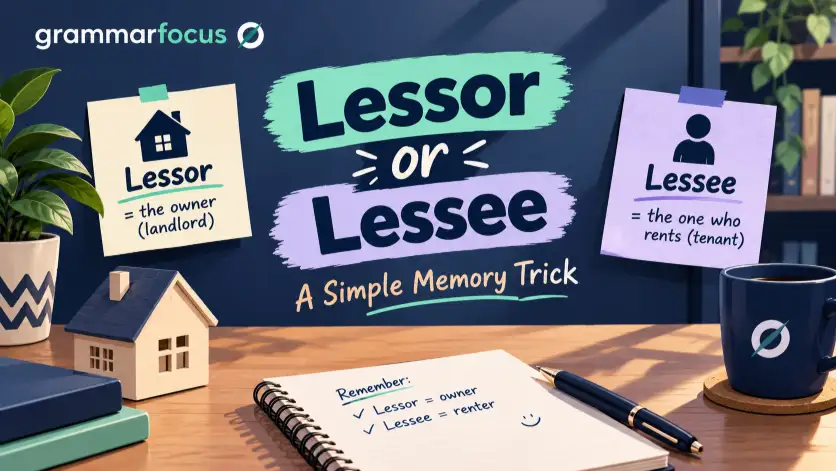
Lessor or Lessee: A Simple Memory Trick
Use this memory trick:
- Lessor: Leases something out
- Lessee: Leases something in
Another useful reminder is:
The lessor gives access.
The lessee receives access.
House:
- Landlord = lessor
- Tenant = lessee
Car:
- Leasing company = lessor
- Customer using the car = lessee
Equipment:
- Equipment provider = lessor
- Business using the equipment = lessee
British English vs. American English
There is no spelling difference between British and American English for lessor.
Both varieties use:
- lessor
- lessee
- lease
- leasing
Example in American English:
The lessor sent the contract by email.
Example in British English:
The lessor sent the contract by email.
The spelling leasor is not a standard British or American alternative. The correct form remains lessor in both varieties.
Key Takeaways Of Leasor or lessor
- Lessor is the correct spelling.
- Leasor is a common misspelling.
- A lessor leases property or an asset to another party.
- A lessee receives the right to use the property or asset.
- Lessor is common in contracts and legal writing.
- Landlord is a more familiar everyday word for someone who rents out property.
- A lessor may provide houses, offices, land, cars, machines, or equipment.
- The spelling is the same in British and American English.
- Remember: lessor leases something out.
FAQs About Leasor or lessor
Q1. Is leasor or lessor correct?
Answer. Lessor is correct. Leasor is a common misspelling and should be avoided in standard English.
Q2. What does lessor mean?
Answer. A lessor is a person or company that leases property, land, equipment, or another asset to someone else.
Q3. What is the difference between lessor and lessee?
Answer. The lessor provides the property or asset. The lessee receives the right to use it under a lease agreement.
Q4. Is a landlord a lessor?
Answer. Yes. A landlord who rents out a house, apartment, or other property can be called a lessor. However, lessor is a more formal term.
Q5. Can a company be a lessor?
Answer. Yes. A company can act as a lessor when it leases cars, machinery, office space, equipment, or other assets to another party.
Q6. Is lessor used in legal documents?
Answer. Yes. Lessor is common in rental agreements, lease contracts, business documents, and other formal writing.
Q7. Is leasor an accepted spelling in British English?
Answer. No. Leasor is not the standard spelling in British English. Use lessor instead.
Q8. How can I remember the spelling of lessor?
Answer. Remember that lessor has two s’s. You can also use this phrase: “The lessor leases something out.”
Conclusion: Leasor or Lessor?
When choosing between leasor or lessor, always use lessor. It is the correct standard spelling for a person or company that leases property or another asset to someone else.
The word is common in rental agreements, legal documents, real estate, business, and equipment leasing. In everyday conversation, people may use landlord or rental company, but lessor is the more formal term.
Remember the main difference:
Lessor gives the lease. Lessee receives the lease.
And remember the spelling:
Lessor has two s’s.
Get It Right
- Happiness or Happyness? The Correct Spelling Explained (2026)
- Licensed vs Licenced: Stop Getting This Wrong (2026)
- Resetted or Reset? The Grammar Mistake Everyone Makes (2026)

I’m Alex Morgan, an American English writer with 6 years of experience exploring grammar, punctuation, sentence structure, and everyday English usage. I enjoy turning confusing grammar rules into clear, practical explanations that help readers write and communicate with confidence.







1 thought on “Leasor or Lessor: Which Spelling Is Correct?”