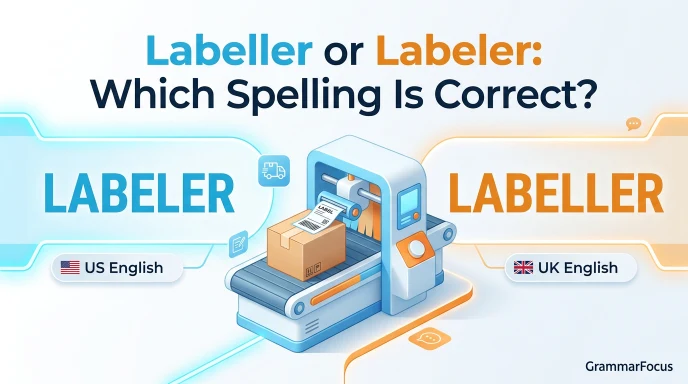
Both “labeller” and “labeler” are correct spellings. The main difference is regional spelling. Labeler is more common in American English, while labeller is more common in British English and some other varieties of English.
Both words mean a person or machine that labels something.
For example:
- The labeler checked every package.
- The labeller printed the product names correctly.
The difference is the extra l in labeller.
Labeller or Labeler: Quick Answer
| Spelling | Common Usage | Meaning |
| Labeler | American English | A person or machine that labels something |
| Labeller | British English | A person or machine that labels something |
Simple Rule
- Labeler = common US spelling
- Labeller = common UK spelling
- Both are correct.
- Both have the same basic meaning.
The choice depends mainly on the English variety you are using.
Pronunciation and Word Form
Labeler
labeler
LAY-buh-ler
Give feedback
- Part of speech: Noun
- Meaning: A person or machine that labels something
Example:
The labeler marked each package before shipping.
Labeller
- US pronunciation: /ˈleɪbələr/
- UK pronunciation: /ˈleɪbələ/
- Part of speech: Noun
- Meaning: A person or machine that labels something
Example:
The labeller was used to place labels on the bottles.
The two forms are generally pronounced the same. The spelling difference does not create a different meaning.
Definition and Meaning of Labeler and Labeller
A labeler or labeller is a person or machine that puts a label on something.
A label can provide information such as:
- A product name
- A price
- A barcode
- A warning
- An address
- A description
- A brand name
The noun comes from the verb label.
Examples
- The worker is responsible for checking each labeler.
- The machine acts as an automatic labeler.
- The factory installed a new labeller.
- The labeller places labels on bottles at high speed.
The word can describe either a person or a device, depending on the context.
The Main Difference Between Labeller and Labeler
The main difference is spelling style, not meaning.
Labeler
Labeler is the spelling commonly used in American English.
Example:
The company bought a new automatic labeler.
Labeller
Labeller is the spelling commonly used in British English.
Example:
The company bought a new automatic labeller.
Both sentences have the same meaning.
The only visible difference is the extra l in labeller.
Why Does Labeller Have Two Ls?
The difference comes from how American and British English handle the final l when adding the suffix -er.
The base word is:
label
Adding -er can produce two standard forms:
American English:
label + er = labeler
British English:
label + ler = labeller
British English often doubles the final l in words of this type, while American English commonly keeps a single l.
This is why you may also see differences such as:
| American English | British English |
| Labeler | Labeller |
| Traveler | Traveller |
| Canceled | Cancelled |
| Labeled | Labelled |
These patterns can vary from word to word, so they should not be treated as a rule that applies to every English word.
Labeler in American English
Labeler is the usual spelling for American English.
You may see it in:
- Product packaging
- Manufacturing
- Retail
- Warehousing
- Shipping
- Business documents
- Technical writing
Examples
- The labeler prints the product information automatically.
- The factory uses an electronic labeler.
- The worker operates the bottle labeler.
- The package was checked by the labeler.
- We need a faster labeler for the new production line.
For a US audience, labeler is generally the natural choice.
Labeller in British English
Labeller is the spelling commonly used in British English.
It can appear in the same types of contexts:
- Manufacturing
- Packaging
- Retail
- Shipping
- Product labeling
- Technical documents
Examples
- The factory purchased a new labeller.
- The bottle labeller needs maintenance.
- The worker checked the labeller before starting production.
- The automatic labeller can process hundreds of bottles per hour.
- The company upgraded its packaging labeller.
For a UK audience, labeller is generally the preferred spelling.
British English vs American English
| English Variety | Preferred Spelling |
| American English | Labeler |
| British English | Labeller |
| Canadian English | Labeler / Labeller |
| Australian English | Labeller |
| New Zealand English | Labeller |
The exact preference can vary by publication, industry, and style guide, especially outside the US and UK.
Which Spelling Should You Use?
Choose the spelling that matches your target audience.
For American English
Use labeler.
Example:
The automatic labeler applies labels to each bottle.
For British English
Use labeller.
Example:
The automatic labeller applies labels to each bottle.
For International Writing
Either form may be understood internationally. If your article or website follows a particular English variety, keep the spelling consistent throughout the content.
For example, if you use labeler, do not switch to labeller later unless you are specifically discussing the British spelling.
Common Mistakes
Mistake 1: Calling Labeller Incorrect
Labeller is not an incorrect spelling.
It is a standard spelling used especially in British English.
Mistake 2: Calling Labeler Incorrect
Labeler is also not an incorrect spelling.
It is commonly used in American English.
Mistake 3: Mixing Both Forms Without a Reason
Avoid switching between labeler and labeller randomly in the same article.
Choose the spelling that matches your audience and maintain it consistently.
Mistake 4: Confusing Labeler With Label
A label is the piece of information or material attached to something.
A labeler or labeller is the person or machine that applies the label.
Example:
The labeler attached a new label to the bottle.
Quick Examples
American English
- The labeler is ready for production.
- We purchased a new package labeler.
- The machine automatically labels each box.
British English
- The labeller is ready for production.
- We purchased a new package labeller.
- The machine automatically labels each box.
The meaning remains the same. Only the preferred spelling changes.
The Origin of Labeler and Labeller
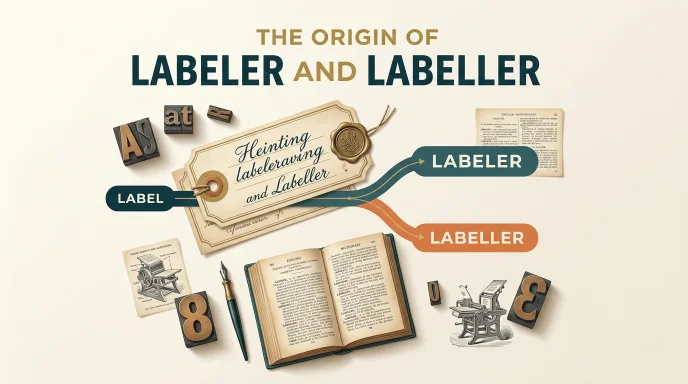
The words labeler and labeller come from the verb label.
The word label entered English through Old French and has historical connections with a strip, ticket, or piece of material attached to something.
Over time, its meaning expanded to include a piece of information attached to a product, object, or document.
When -er is added to label, it creates a noun for a person or thing that performs the action:
- label + er = labeler
- label + ler = labeller
The two forms developed as part of different English spelling conventions.
Labeler and Labeller in Everyday Use
Both spellings can be used when talking about people or machines that apply labels.
A Person
- The labeler checked the boxes before shipping.
- The labeller prepared the products for delivery.
- Each labeler was trained to inspect the packaging.
- The factory assigned a worker to operate the labeller.
A Machine
- The automatic labeler applies labels to bottles.
- The new labeller can process hundreds of packages.
- The company replaced its old labeler.
- The production line now uses an advanced labeller.
The surrounding context usually makes it clear if the word refers to a person or a machine.
Labeler or Labeller in Different Industries
Packaging
Both forms are commonly used for machines that attach labels to products.
American English:
The bottle labeler applies labels quickly.
British English:
The bottle labeller applies labels quickly.
Manufacturing
Factories may use automatic machines to label products, boxes, bottles, or containers.
Example:
The new labeler increased the speed of the packaging process.
Retail
A person who attaches or checks product labels may also be called a labeler or labeller.
Example:
The labeller checked the prices before the products reached the shelves.
Shipping
Labels are essential for addresses, barcodes, and package information.
Example:
The automated labeler printed shipping labels for every package.
Labeler and Labeller in Related Words
The spelling difference can also appear in related forms of label.
| American English | British English |
| Label | Label |
| Labeled | Labelled |
| Labeling | Labelling |
| Labeler | Labeller |
The base word label remains the same. The spelling differences usually appear when a suffix is added.
Examples
American English:
The company is labeling the products with an automatic labeler.
British English:
The company is labelling the products with an automatic labeller.
Both sentences are grammatically correct.
Labeling or Labelling?
Because labeler is related to the verb label, it is useful to understand the related spelling labeling and labelling.
American English
American English generally uses:
- label
- labeled
- labeling
- labeler
British English
British English generally uses:
- label
- labelled
- labelling
- labeller
This explains why you may see labeler in an American article and labeller in a British article.
Common Mistakes with Labeler and Labeller
Mistake 1: Using “Labeller” for American Style
This is not necessarily grammatically wrong, but labeler is generally the preferred American spelling.
American style:
The company bought a new labeler.
Mistake 2: Using “Labeler” for British Style
Again, the word is understandable, but labeller is generally preferred in British English.
British style:
The company bought a new labeller.
Mistake 3: Mixing “Labeling” and “Labelling”
Try to keep related spellings consistent.
American style:
The machine is labeling products with an automatic labeler.
British style:
The machine is labelling products with an automatic labeller.
Mistake 4: Thinking the Extra “L” Changes the Meaning
It does not.
Labeler and labeller refer to the same basic thing.
The extra l is a spelling difference, not a difference in meaning.
Easy Memory Trick
Use this simple connection:
American English:
label → labeling → labeler
British English:
label → labelling → labeller
You can remember it as:
US = one L in the ending
UK = double L in the ending
This makes it easier to keep the related forms consistent.
Frequently Asked Questions
Q1. Is labeler or labeller correct?
Answer. Both labeler and labeller are correct. Labeler is commonly used in American English, while labeller is commonly used in British English.
Q2. What is the difference between labeler and labeller?
Answer. There is no major difference in meaning. Both refer to a person or machine that labels something. The main difference is the spelling convention used in different varieties of English.
Q3. Is labeler American English?
Answer. Yes. Labeler is the spelling commonly preferred in American English.
Q4. Is labeller British English?
Answer. Yes. Labeller is the spelling commonly preferred in British English.
Q5. Is labeller wrong in American English?
Answer. Labeller is a recognized spelling, but American English generally prefers labeler. If you are following US English style, labeler is the more consistent choice.
Q6. Is labeler wrong in British English?
Answer. Labeler is understandable and used in some contexts, but British English generally prefers labeller. Use labeller when following standard British spelling conventions.
Q7. What is the difference between labeler and labeling?
Answer. Labeler is a noun for a person or machine that applies labels. Labeling is the action of putting labels on something.
Example:
The labeler is responsible for labeling the bottles.
Q8. Which spelling should I use for a US audience?
Answer. Use labeler for a US audience. It matches the common American spelling pattern used with related forms such as labeled and labeling.
Conclusion
Labeler and labeller are both correct English spellings.
The main difference is regional spelling preference:
- Labeler = commonly preferred in American English
- Labeller = commonly preferred in British English
Both words describe a person or machine that applies labels.
The same spelling pattern appears in related forms:
- US: labeled, labeling, labeler
- UK: labelled, labelling, labeller
The easiest rule to remember
Use “labeler” for American English and “labeller” for British English.
Most importantly, choose one variety of English and keep your spelling consistent throughout the same piece of writing.
Learn More About Grammar:
- Worshipers or Worshippers: Which Spelling Is Correct?
- Cheap or Cheep? Same Sound, Totally Different Meaning (2026)
- Pavilion or Pavillion? Stop Adding That Extra “L” (2026)

I’m Alex Morgan, an American English writer with 6 years of experience exploring grammar, punctuation, sentence structure, and everyday English usage. I enjoy turning confusing grammar rules into clear, practical explanations that help readers write and communicate with confidence.