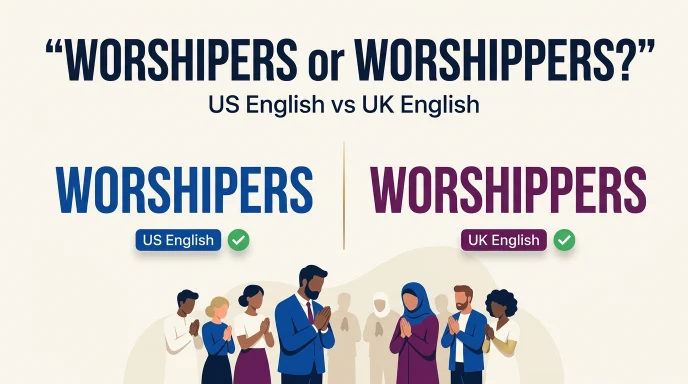
When it comes to worshipers or worshippers, both spellings are correct. The main difference is regional spelling preference worshipers is more common in American English, while worshippers is more common in British English.
I ran into this exact confusion while editing a newsletter for a local community center. One paragraph described “worshippers gathering for the evening service,” while another, written by a different volunteer, used “worshipers” for the same event. Neither version looked wrong, but seeing both in the same document made me stop and check which one was actually correct and it turns out, both were.
Both words mean people who worship a god, gods, or something they deeply respect or admire.
Examples:
The worshipers gathered at the church.
The worshippers gathered at the temple.
Thousands of worshipers attended the religious ceremony.
The worshippers prayed together.
The only spelling difference is the extra “p” in worshippers.
Worshipers or Worshippers: Quick Answer
| Spelling | Usage | Meaning |
| Worshipers | More common in American English | People who worship |
| Worshippers | More common in British English | People who worship |
Simple Answer
- Worshipers = correct
- Worshippers = correct
- Worshiper = singular American spelling
- Worshipper = singular British spelling
You can use either spelling. Choose the form that matches your audience and the style of your writing.
Comparison Table: Worshipers or Worshippers
| Feature | Worshiper | Worshipper |
| Spelling Style | American English | British English |
| Number of “P”s | Single “p” | Double “p” |
| Meaning | Person who worships | Person who worships |
| Pronunciation | Same | Same |
| Common Region | USA | UK, Australia, Commonwealth |
| Plural Form | Worshipers | Worshippers |
| Example Sentence | The worshiper prayed quietly. | The worshipper prayed quietly. |
Pronunciation and Word Form
Worshiper
- US pronunciation: /ˈwɝːʃəpər/
- UK pronunciation: /ˈwɜːʃɪpə/
- Part of speech: Noun
- Meaning: One person who worships
Example: The worshiper entered the church quietly.
Worshipper
- US pronunciation: /ˈwɝːʃəpər/
- UK pronunciation: /ˈwɜːʃɪpə/
- Part of speech: Noun
- Meaning: One person who worships
Example: The worshipper stood near the temple entrance.
Worshipers
- Part of speech: Plural noun
- Meaning: More than one worshiper
Example: The worshipers gathered before sunrise.
Worshippers
- Part of speech: Plural noun
- Meaning: More than one worshipper
Example: The worshippers joined the morning prayer.
The two plural forms have the same meaning and are pronounced in the same way.
Definition and Meaning of Worshipers and Worshippers
The words worshipers and worshippers refer to people who worship.
The verb worship means to show deep respect, devotion, or religious love toward a god or another sacred being. The noun worshiper describes a person who performs this action.
Religious Meaning
In a religious context, a worshiper is someone who prays, attends religious services, follows religious practices, or shows devotion to a deity.
Examples:
- The worshipers prayed in silence.
- The worshippers attended the evening service.
- The mosque was filled with worshipers.
- The temple welcomed many worshippers.
Broader Meaning
The word can also describe someone who admires or respects a person or thing intensely.
Examples:
- He was a worshiper of classical music.
- The artist had many worshipers of her work.
- The famous actor attracted devoted worshippers.
However, this broader use is less common than the religious meaning.
Why Are There Two Spellings?
The difference comes from the spelling patterns used in American and British English.
The word is formed from:
worship + er
When the suffix -er is added, English spelling conventions may produce:
- worshiper in American English
- worshipper in British English
The British form usually doubles the final consonant before adding the suffix. American English often keeps the single consonant in this word.
Spelling Pattern
American English:
worship + er = worshiper
British English:
worship + per = worshipper
The pronunciation and meaning do not change.
Worshipers in American English
Worshipers is the spelling commonly preferred in American English.
Use this form when writing for:
- American readers
- US schools and universities
- American newspapers
- US religious organizations
- American websites and publications
Examples
- The worshipers gathered in the church.
- The temple welcomed hundreds of worshipers.
- Worshipers observed the religious holiday.
- The worshipers listened to the sermon.
- Many worshipers arrived early for prayer.
The singular form is:
Worshiper
The plural form is:
Worshipers
Worshippers in British English
Worshippers is the spelling commonly preferred in British English.
It is also used in many other varieties of English, including some Commonwealth contexts.
Examples
- The worshippers gathered at the mosque.
- The church was full of worshippers.
- Worshippers attended the special service.
- The temple opened its doors to worshippers.
- The worshippers prayed together.
The singular form is:
Worshipper
The plural form is:
Worshippers
British English vs American English Spelling
| English Variety | Singular | Plural |
| American English | Worshiper | Worshipers |
| British English | Worshipper | Worshippers |
| Canadian English | Worshiper or Worshipper | Worshipers or Worshippers |
| Australian English | Worshipper | Worshippers |
American English usually prefers worshiper and worshipers.
British English usually prefers worshipper and worshippers.
Both forms are standard English spellings.
Worshipers or Worshippers: Usage and Search Trends
Search and usage data reveal a clear regional split for this word pair.
In the United States:
“Worshiper” is the dominant spelling, appearing in American newspapers, religious publications, and everyday writing.
In the UK, Australia, and Commonwealth Countries:
“Worshipper” remains the standard choice, used consistently in religious institutions, news outlets, and formal publications.
Usage Insight:
- Religious articles in the UK prefer worshipper
- American publications mostly use worshiper
Which Spelling Should You Use?
Use “Worshipers” for American Readers
Choose worshipers if your article, website, or document is aimed at a US audience.
Example: The worshipers gathered for the Sunday service.
Use “Worshippers” for British Readers
Choose worshippers if your audience uses British English.
Example: The worshippers gathered for the Sunday service.
Use Either Form for a General Audience
If you are writing for an international audience, both forms are acceptable. The most important point is to use one spelling consistently.
Do not switch between worshipers and worshippers without a reason.
Common Mistakes
Mistake 1: Treating One Spelling as Incorrect
Incorrect assumption: Worshippers is always wrong. Correct explanation: Worshippers is a standard British English spelling.
Incorrect assumption: Worshipers is always wrong. Correct explanation: Worshipers is a standard American English spelling.
Mistake 2: Mixing Singular and Plural Forms
Incorrect: One worshipers entered the church. Correct: One worshiper entered the church.
Incorrect: Many worshipper attended the service. Correct: Many worshippers attended the service.
Mistake 3: Changing the Meaning
The extra p does not change the meaning.
- Worshipers and worshippers have the same meaning.
- Worshiper and worshipper have the same meaning.
The difference is mainly spelling style.
Everyday Examples
Religious Services
- The worshipers attended the morning service.
- The worshippers gathered before the ceremony.
- Many worshipers prayed together.
- The worshippers remained inside the temple.
News Reports
- Worshipers gathered peacefully outside the religious center.
- Local worshippers celebrated the annual festival.
- The ceremony attracted thousands of worshipers.
Formal Writing
- The building can hold more than 500 worshipers.
- The temple provides facilities for worshippers.
- The event was attended by religious leaders and worshipers.
Social Media
- Wishing all worshipers a peaceful holiday.
- Many worshippers shared photos of the celebration.
- A beautiful morning with fellow worshipers.
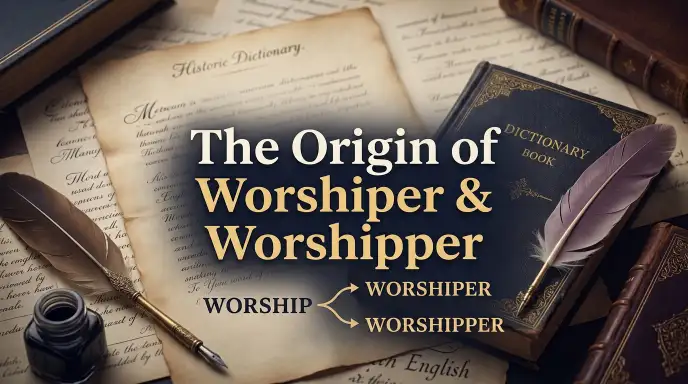
The Origin of Worshiper and Worshipper
The words worshiper and worshipper come from the verb worship.
The word worship has Old English roots. It is connected with the idea of showing honor, respect, or devotion. Over time, its meaning became closely associated with religious devotion and prayer.
The suffix -er means “a person who performs an action.”
Therefore:
worship + er = worshiper
The British spelling adds another p:
worship + per = worshipper
Both forms describe a person who worships.
The Spelling Rule Behind Worshiper and Worshipper
English uses different spelling patterns in American and British English.
In many British English words, a final consonant is doubled before a suffix is added. American English often keeps the consonant single in similar words.
This creates the two accepted forms:
- Worshiper: American English
- Worshipper: British English
The same spelling pattern can appear in other words.
| American English | British English |
| Worshiper | Worshipper |
| Traveler | Traveller |
| Traveling | Travelling |
| Labeled | Labelled |
| Canceled | Cancelled |
These patterns are not identical in every word. Therefore, it is best to check the standard spelling of each word instead of applying one rule to every situation.
Worshiper or Worshipper in Religious Contexts
Both spellings are suitable for religious writing.
Christianity
- The worshipers gathered for Sunday service.
- The worshippers sang hymns together.
- Each worshiper listened to the sermon.
- The church welcomed new worshippers.
Islam
- Worshipers gathered for the Friday prayer.
- The mosque was filled with worshippers.
- Many worshipers observed the religious occasion.
- The worshippers prayed together.
Hinduism
- Worshipers visited the temple early in the morning.
- The temple welcomed many worshippers.
- The worshipers brought flowers for the ceremony.
Other Religious Traditions
- The worshipers gathered at the sacred site.
- The worshippers followed the traditional ceremony.
- Visitors watched the worshipers pray.
The spelling does not depend on the religion. It depends mainly on the English variety being used.
Worshiper or Worshipper in Nonreligious Writing
The word can also describe someone who admires a person, activity, or idea deeply.
Examples
- He is a worshiper of classical music.
- She became a worshipper of the famous artist.
- The actor attracted many devoted worshipers.
- The author had several worshippers of his work.
This use is less common than the religious meaning. In everyday English, words such as fan, admirer, or supporter may sound more natural.
For example:
- Natural: She is a huge fan of the singer.
- Less common: She is a worshipper of the singer.
Singular and Plural Forms
The spelling changes slightly when the word becomes plural.
| Number | American English | British English |
| Singular | Worshiper | Worshipper |
| Plural | Worshipers | Worshippers |
Singular Examples
- The worshiper entered the church.
- The worshipper stood near the temple.
Plural Examples
- The worshipers entered the church.
- The worshippers stood near the temple.
Use the singular form for one person. Use the plural form for two or more people.
Frequently Asked Questions
Q1. Is worshipers or worshippers correct?
Answer. Both worshipers and worshippers are correct. Worshipers is more common in American English, while worshippers is more common in British English.
Q2. What is the difference between worshiper and worshipper?
Answer. There is no difference in meaning. Both words describe a person who worships. Worshiper is the common American spelling, and worshipper is the common British spelling.
Q3. Should I use worshipers or worshippers in American English?
Answer. Use worshipers in American English. It is the spelling commonly preferred in US writing.
Q4. Should I use worshipers or worshippers in British English?
Answer. Use worshippers in British English. It is the spelling commonly preferred in the UK and many Commonwealth contexts.
Q5. Is worshippers with two p’s wrong?
Answer. No. Worshippers is a correct British English spelling. The extra p does not make the word incorrect.
Q6. Is worshipers with one p’s correct?
Answer. Yes. Worshipers is the correct American English spelling. It is also understood by English speakers around the world.
Q7. What is the plural of worshipper?
Answer. The plural of worshipper is worshippers.
Example: The worshippers gathered for the ceremony.
Q8. What is the plural of worshiper?
Answer. The plural of worshiper is worshipers.
Example: The worshipers attended the service.
Conclusion
Worshipers and worshippers are both correct English spellings.
Use worshipers when following American English spelling. Use worshippers when following British English spelling.
Both forms have the same meaning, pronunciation, and grammatical function. The only difference is the extra p in the British spelling.
Remember This Rule
- US English: worshiper, worshipers
- UK English: worshipper, worshippers
Choose one spelling style and use it consistently throughout your article, website, email, or formal document.
Learn More About Grammar:
- Cheap or Cheep? Same Sound, Totally Different Meaning (2026)
- Pavilion or Pavillion? Stop Adding That Extra “L” (2026)
- Biger or Bigger? Know the Correct Spelling (2026)

I’m Elena Cooper, an English grammar writer with 6 years of experience explaining grammar, punctuation, sentence structure, word usage, and common English mistakes. I create clear, practical, and easy-to-follow content that helps readers understand confusing grammar rules and use English accurately and confidently.







1 thought on “Worshipers or Worshippers: Which Spelling Is Correct?”