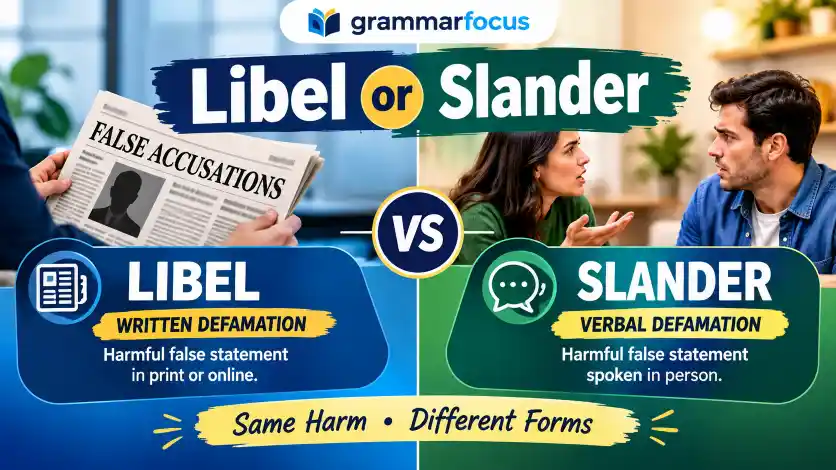
Libel or Slander: Libel is a false and harmful statement expressed in a lasting form, while slander is a false and harmful statement spoken aloud. Both terms relate to defamation, which can damage a person’s reputation.
The main difference is how the statement is shared. Libel often involves written words, online posts, or published content. Slander usually involves spoken words.
Understanding these terms can help you discuss reputation, public statements, and legal issues more clearly. The exact legal rules can vary by location.
Libel vs. Slander: Quick Answer
Libel is generally written defamation, while slander is generally spoken defamation. Both involve statements that can harm someone’s reputation.
| Term | General Meaning | Example |
| Libel | Defamation in a written or lasting form | Publishing a false claim about a business in an article |
| Slander | Defamation through spoken words | Making a false statement about a person during a public speech |
Important: Not every false or insulting statement is legally defamation. The rules depend on the facts and the law that applies.
Definition and Meaning of Libel or Slander
What Does Libel Mean?
Libel refers to defamation expressed in a written, printed, or otherwise lasting form. It can involve newspapers, websites, social media posts, or other published material.
For example:
- Someone publishes a false accusation about a local shop.
- A person posts a harmful and untrue claim about a colleague online.
- A website publishes a false statement that damages someone’s reputation.
These examples may raise a libel issue, depending on the facts and the relevant law.Libel can spread quickly because written content may be shared, copied, or viewed by many people.
What Does Slander Mean?
Slander refers to defamation expressed through spoken words or other temporary forms of communication.
For example:
- Someone makes a false accusation about a neighbour during a meeting.
- A person spreads a harmful, untrue rumor about a coworker by speaking to others.
- A speaker makes a false claim about a business in front of an audience.
These situations may raise a slander issue if the legal requirements for defamation are met.
The key point is that slander usually involves spoken statements, while libel usually involves published or recorded material.
The Origin of Libel or Slander
The words libel and slander have different histories.
Libel comes from the Latin word libellus, meaning “little book” or “document.” Over time, the term became associated with written statements that harmed someone’s reputation.
Slander entered English through Old French, with roots in Latin and Greek words connected to scandal or a damaging accusation.
Both words developed legal meanings over time. Today, they are commonly used when discussing false statements that may harm a person’s reputation.
Their history also helps explain the basic distinction, libel is linked to written material, while slander is linked to spoken statements.

Libel vs Slander: Key Differences
The most familiar difference is the form of communication. However, other details can matter when a statement leads to a legal dispute.
| Feature | Libel | Slander |
| Main form | Written or lasting statement | Spoken statement |
| Common examples | Articles, posts, printed material | Speeches, conversations, spoken rumors |
| How it spreads | Can be copied and shared | Often spreads through speech |
| Evidence | May include documents, screenshots, or recordings | May include witnesses or recordings |
| Legal rules | Depend on the location and facts | Depend on the location and facts |
The distinction is useful, but it is not identical in every legal system. Some laws treat recorded audio, video, or online material in ways that require closer legal analysis.
Libel or Slander in Everyday Situations
These terms can appear in news reports, workplace disputes, online discussions, and conversations about public figures.
Social Media Posts
A person publishes a false claim about another person on a public profile. Because the statement appears in written or lasting form, it may raise a libel issue.
Workplace Conversations
An employee makes a false, harmful statement about a coworker while speaking to other staff. This may raise a slander issue.
Newspaper Articles
A newspaper publishes a false accusation that harms someone’s reputation. This may be considered libel, depending on the circumstances.
Public Speeches
A speaker makes a false accusation about someone during a speech. This may raise a slander issue.
These examples show the general distinction. If a statement is legally defamatory depends on more than its format alone.
Common Mistakes With Libel or Slander
1. Thinking Every Lie Is Defamation
A false statement does not automatically count as libel or slander. The legal requirements vary by jurisdiction and situation.
2. Confusing Defamation With an Opinion
A harsh opinion is not automatically defamation. The difference between an opinion and a false statement of fact can be important.
3. Assuming Online Posts Are Always Slander
Online posts are usually written or recorded, so they are more commonly discussed as possible libel rather than slander. The exact classification depends on the applicable law.
4. Believing the Rules Are the Same Everywhere
Different countries and regions have different defamation laws. A situation that meets the legal test in one place may be treated differently elsewhere.
Libel or Slander: Simple Example Sentences
Libel:
- The newspaper faced a libel claim over a false article.
- The online post raised concerns about possible libel.
- The author removed the statement after receiving a legal complaint.
Slander:
- The false spoken accusation led to a slander complaint.
- She said the rumor damaged her reputation.
- The lawyer discussed if the public statement could amount to slander.
These sentences show how the words are used. They do not mean that every situation described would lead to a successful legal claim.
Legal Considerations: Libel or Slander
Libel and slander are both forms of defamation, but the legal rules depend on the country or state. A statement does not automatically become defamation simply because it is false, upsetting, or damaging to someone’s reputation.
Legal claims may depend on several factors:
- False statement: The statement may need to present false information as fact.
- Communication to another person: Someone other than the person targeted generally must receive the statement.
- Reputational harm: The statement may need to cause harm, depending on the applicable law.
- Fault: The required level of fault can vary based on the circumstances and the people involved.
- Legal protections: Certain statements may receive protection under the law, even when they harm someone’s reputation.
For example, a false written accusation in a public post may raise questions about libel. A false accusation spoken during a meeting may raise questions about slander. However, the facts and local law determine the legal outcome.
If you are dealing with a real dispute, consult a qualified lawyer in your jurisdiction. This explanation is for general information, not legal advice.
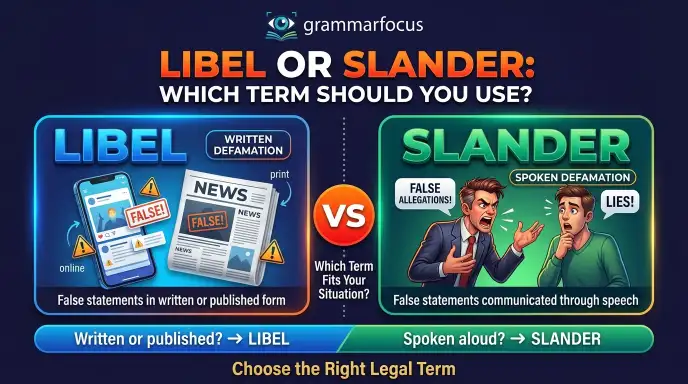
Libel or Slander: Which Term Should You Use?
Use libel when discussing potentially defamatory statements in written or other lasting forms. Use slander when discussing potentially defamatory statements made through speech.
Here are a few simple examples:
- Libel: “The newspaper published a false accusation about the shop owner.”
- Slander: “The speaker made a false accusation about the shop owner during a meeting.”
- Defamation: “The accusation may be defamatory, depending on the facts and applicable law.”
In modern communication, the distinction can require closer attention. A recorded speech, online video, or audio message may not fit neatly into a simple written versus spoken comparison. The applicable legal rules matter.
Libel or Slander: Google Trends and Usage Data
People search for libel or slander to understand the difference between these legal terms, especially when reading news reports, discussing public accusations, or learning about defamation.
Search interest can change over time. Major legal cases, public controversies, and news coverage may increase interest in one term or both. Interest can also differ by country and region. Without a verified, location specific comparison, it would be misleading to claim that one term receives more searches than the other.
The most useful distinction for everyday readers remains the basic one: libel generally concerns defamatory statements in a lasting form, while slander generally concerns defamatory speech.
Key Takeaway: Libel or Slander
- Libel generally refers to defamation in written or other lasting forms.
- Slander generally refers to defamation through spoken words.
- Both terms concern statements that may harm someone’s reputation.
- A false statement does not automatically qualify as defamation.
- Legal definitions, requirements, and protections vary by jurisdiction.
Remember the simple distinction: libel is usually written, while slander is usually spoken. For a real legal dispute, the specific facts and local law are more important than the label alone.
FAQs About Libel or Slander
Q1. What is the main difference between libel and slander?
Answer. Libel generally involves defamatory statements in written or lasting forms, while slander generally involves defamatory spoken statements.
Q2. Is libel written and slander spoken?
Answer. That is the basic distinction. However, recorded audio, videos, and online content can require a closer legal analysis because laws differ by jurisdiction.
Q3. Is libel more serious than slander?
Answer. Neither term is automatically more serious. The harm, evidence, circumstances, and applicable law affect how a claim is assessed.
Q4. Can a social media post be libel?
Answer. A false statement posted online may raise a libel issue if it meets the relevant legal requirements. Not every inaccurate, critical, or insulting post is legally defamatory.
Q5. Can spoken words be slander?
Answer. Yes. A spoken false statement that harms someone’s reputation may raise a slander issue, depending on the circumstances and local law.
Q6. Are opinions considered libel or slander?
Answer. Not every opinion is defamatory. The distinction between an opinion and a statement presented as fact can matter, but the wording and context are important.
Q7. Can someone sue for libel or slander?
Answer. A person may be able to bring a defamation claim if the legal requirements are met. The rules, available remedies, and deadlines vary by jurisdiction, so legal advice may be necessary.
Q8. What is the easiest way to remember libel or slander?
Answer. Remember libel = written or lasting form and slander = spoken words. This is a helpful general rule, although legal classifications can be more complex.
Conclusion:
Libel and slander are related terms for forms of defamation. Libel generally refers to harmful false statements expressed in writing or another lasting form, while slander generally refers to harmful false statements made through speech.
The key is to understand the difference without assuming that every false statement is illegal. The circumstances and applicable law determine if a statement qualifies as defamation.
Learn More About Grammar:
- Argentinian or Argentine: The Difference Explained With Examples
- White or Caucasian: Meaning, Differences, and Usage in 2026
- Wane or Wain: Which Word Is Correct? Meaning and Examples

I’m Alex Morgan, an American English writer with 6 years of experience exploring grammar, punctuation, sentence structure, and everyday English usage. I enjoy turning confusing grammar rules into clear, practical explanations that help readers write and communicate with confidence.








1 thought on “Libel or Slander: How Written and Spoken Defamation Differ ”