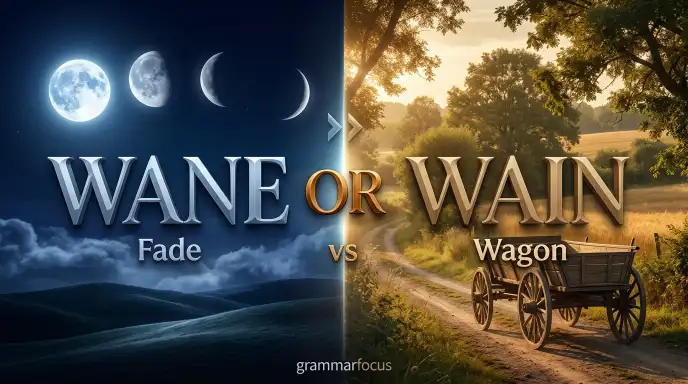
Wane or wain are different English words with different meanings. Wane means to become weaker, smaller, or less intense, while wain is an old word for a wagon or cart.
People often search for wane or wain because the words sound similar but have very different meanings.
This can cause confusion when writing or reading English, especially because wain is now uncommon in everyday use.
The easiest way to remember them is simple: wane describes something that decreases, while wain refers to a wagon or cart. In modern English, wane is much more common.
Wane or Wain: Quick Answer
Use wane when you mean to become weaker, smaller, or less powerful. Use wain when referring to an old fashioned wagon or cart.
| Word | Meaning | Example |
| Wane | Become weaker or decrease | Her interest began to wane. |
| Wain | A wagon or cart | The farmer loaded the wain. |
Wane in a Sentence
Public interest in the story began to wane.
Here, wane means that the interest gradually became weaker.
It can also describe the moon:
The moon began to wane after the full moon.
Wain in a Sentence
The farmer loaded hay onto the wain.
Here, wain means a wagon or cart.
Today, this word is mostly found in historical writing, poetry, literature, and traditional expressions.
Side by Side Comparison
| Feature | Wane | Wain |
| Word type | Verb and noun | Noun |
| Main meaning | Decrease or become weaker | Wagon or cart |
| Common today? | Yes | Rare |
| Common context | Interest, power, moon, influence | Historical or literary writing |
| Example | His influence began to wane. | The wain carried the hay. |
The words are easy to confuse because they have similar sounds. Their meanings, however, are completely different.
Definition and Meaning of Wane or Wain
What Does Wane Mean?
Wane means to become weaker, smaller, or less powerful over time.
For example:
Her enthusiasm began to wane.
This means her enthusiasm gradually became weaker.
The word can describe many things, including:
- Interest
- Energy
- Influence
- Power
- Popularity
- Hope
- Confidence
- Enthusiasm
For example:
His popularity began to wane.
The sentence means that his popularity started to decrease.
Wane as a Noun
Wane can also be a noun. It can refer to a gradual decrease in strength, size, or influence.
The project was in its final wane.
However, the noun form is less common in everyday English than the verb.
Wane and the Moon
One of the most familiar uses of wane relates to the moon.
When the visible part of the moon becomes smaller after a full moon, the moon is said to wane.
For example:
The moon is waning.
This is the opposite of waxing, which means becoming larger or more visible.
What Does Wain Mean?
Wain is an old word for a wagon or cart.
It was once used more often for vehicles used to carry goods, crops, or other heavy materials.
For example:
The farmer loaded the grain onto the wain.
Today, wain is uncommon in normal conversation. You are more likely to see it in older books, poetry, historical writing, or traditional expressions.
Wain in Literature
The word wain has a strong connection with older English literature.
One famous example is Charles’s Wain, an old name for the group of stars commonly known as the Big Dipper in North American English.
The word can therefore appear in historical or literary contexts even though most modern speakers rarely use it.
Simple Meaning
A quick way to remember the difference is:
Wane = decrease
Wain = wagon
For example:
Interest began to wane.
The wain carried the goods.
The Origin of Wane or Wain
The two words have different histories, even though they look and sound similar.

Origin of Wane
Wane comes from Old English wanian, meaning to diminish, lessen, or decrease.
The word has been used for centuries to describe something becoming smaller or weaker.
Its connection with the moon also has a long history. When the visible part of the moon decreases after the full moon, it is described as waning.
Over time, the word developed broader figurative uses.
For example:
The king’s influence began to wane.
Here, the word does not describe physical size. It describes a decline in influence.
Origin of Wain
Wain also comes from Old English. It developed from an old word referring to a wagon or vehicle used for carrying loads.
Related forms appeared in other Germanic languages as well.
The word was once useful in everyday descriptions of transport. As English changed and words such as wagon became more common, wain became less common.
Today, it survives mainly in historical, poetic, and literary contexts.
Why Are Wane and Wain Confused?
The main reason is their similar sound.
Wane and wain are pronounced alike in standard English, making them homophones.However, they have different spellings and meanings.
This is similar to other pairs such as:
- sea / see
- right / write
- flower / flour
The spelling helps identify the intended meaning.
British English vs American English Spelling
Unlike many commonly confused spelling pairs, wane and wain do not have different British and American spellings.
Both varieties of English use:
- wane
- wain
The difference is based on meaning, not region.
| Word | American English | British English | Meaning |
| Wane | wane | wane | Become weaker or decrease |
| Wain | wain | wain | Wagon or cart |
For example, both American and British writers can say:
His influence began to wane.
The spelling remains the same.
Likewise:
The old wain stood beside the barn.
Again, both varieties use wain.
The main challenge is choosing the correct word for the meaning you want.
Which Word Should You Use?
Choose wane when something is becoming weaker, smaller, or less important.
Examples:
Her interest began to wane.
The team’s confidence started to wane.
The moon is beginning to wane.
Choose wain only when you mean an old fashioned wagon or cart.
Examples:
The wain carried a heavy load.
The farmer repaired the wooden wain.
For modern everyday writing, wane is far more likely to be the word you need.
If you are describing a decline in popularity, power, interest, or strength, use wane.
If you are reading a historical or literary text and see wain, check the context. It may refer to a wagon or cart.
Common Mistakes with Wane or Wain
Mistake 1: Using Wain for Decline
❌ His popularity began to wain.
✅ His popularity began to wane.
Wane is the correct word for a decrease.
Mistake 2: Using Wane for a Wagon
❌ The farmer loaded the hay onto the wane.
✅ The farmer loaded the hay onto the wain.
Wain is the historical word for a wagon or cart.
Mistake 3: Confusing Their Meanings
The words are homophones, but they are not interchangeable.
❌ Her interest began to wain.
✅ Her interest began to wane.
Mistake 4: Assuming Wain Is a Modern Alternative to Wane
Wain is not another spelling of wane.
They are separate words with separate meanings.
Mistake 5: Forgetting the Moon Meaning
Use wane when the moon appears to become smaller after the full moon.
The moon is waning.
This is a common and correct use of the word.
Wane or Wain in Everyday Examples
In an Email
Interest in the project may wane if we delay the launch.
Here, wane means decrease.
In News Writing
Public support for the proposal began to wane.
The word describes declining support.
On Social Media
My motivation always seems to wane after a long week.
This means motivation becomes weaker.
In Formal Writing
The influence of the policy began to wane over time.
This is a natural formal use of wane.
In Historical Writing
The farmer placed the grain on the wooden wain.
Here, wain refers to an old wagon.
In Literature
The wain moved slowly across the field.
The word creates an old fashioned or literary tone.
The key is always the meaning:
If something decreases, use wane. If you mean a wagon, use wain.
Wane or Wain: Google Trends & Usage Data
Google search interest can help show how often people look for wane and wain, but the two words are not equally common.
Wane appears much more often in modern English because it is still used in everyday writing and speech.
Wain is uncommon today. It mainly appears in historical writing, poetry, literature, or discussions about old wagons.
Search interest for wain may also come from the phrase “wain” in older texts or from people checking the spelling and meaning.
Google Trends data should be read as relative search interest, not as a direct count of how many times a word is used. Search patterns can also change by country and over time.
The key point is simple: wane is the useful modern word for something becoming weaker or smaller, while wain is mainly an old or literary word for a wagon.

Wane or Wain in Different Contexts
The easiest way to choose between these words is to look at the context.
For Declining Strength
Use wane when something is becoming weaker.
- Her interest in the project began to wane.
- The team’s confidence started to wane.
- Public support for the idea is waning.
For the Moon
Use wane when talking about the moon becoming less full.
- The moon is beginning to wane.
- The waning moon appeared above the trees.
For an Old Wagon
Use wain when referring to an old wagon or cart.
- The farmer loaded hay onto the wain.
- The poem describes a wooden wain crossing the field.
In modern writing, wagon or cart is usually clearer than wain.
Common Questions About Wane or Wain
Q1. What is the difference between wane and wain?
Answer. Wane means to become weaker, smaller, or less intense. Wain is an old word for a wagon or cart.
Q2. Is wane a verb or a noun?
Answer. Wane can be both a verb and a noun. As a verb, it means to decrease. As a noun, it refers to a gradual decrease or decline.
Q3. Is wain still used in modern English?
Answer. Wain is still a valid English word, but it is uncommon in everyday modern English. It is mostly found in historical, literary, or poetic contexts.
Q4. Does wane mean the moon is getting smaller?
Answer. Answer. In common descriptions of the moon, wane means the visible illuminated part is decreasing after the full moon.
Q5. Can I use wain to mean decline?
Answer. Answer. No. Use wane for a decline in strength, interest, size, influence, or intensity. Wain does not have this meaning.
Q6. Is wane the opposite of wax?
Answer. Answer. Yes. In common descriptions of the moon, wax means to grow or increase, while wane means to decrease.
Q7. What is a modern word for wain?
Answer. Answer. Depending on the context, wagon or cart is a more familiar modern word for wain.
Q8. Which spelling should I use: wane or wain?
Answer. Use wane when you mean to decrease or become weaker. Use wain only when you mean the old word for a wagon or cart.
Key Takeaway: Wane or Wain
Wane and wain sound similar, but their meanings are very different.
- Wane = become weaker, smaller, or less intense.
- Wain = an old word for a wagon or cart.
- Wane is common in modern English.
- Wain is mainly used in historical and literary contexts.
- Use wax and wane when describing changes in the moon.
A simple memory tip can help: wane is connected with something that wanes or weakens. Wain is connected with an old wagon.
Conclusion:
The difference between wane and wain is mainly a difference in meaning. Wane is used for something that decreases, weakens, or becomes less powerful.
It can describe interest, strength, influence, intensity, and the moon’s visible light.
Wain is a much less common word. It traditionally means a wagon or cart and is most likely to appear in historical or literary writing.
When you need the modern word for a decline, choose wane. When you are reading an old text that mentions a wagon, wain may be the word you need.
Learn More About Grammar:
- Instill or Instil: Which Is Correct? US vs. UK Spelling 2026
- Vez or Ves: Which One Is Correct? Meaning, and Spelling in 2026
- Fillet or Filet: Meaning, Usage, and Spelling

I’m Elena Cooper, an English grammar writer with 6 years of experience explaining grammar, punctuation, sentence structure, word usage, and common English mistakes. I create clear, practical, and easy-to-follow content that helps readers understand confusing grammar rules and use English accurately and confidently.