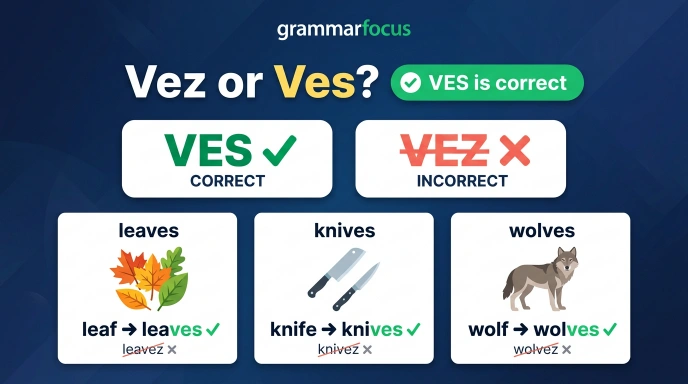
Vez or ves can be confusing because both forms may appear when people try to write a shortened or informal word. In standard English, however, ves is the accepted spelling in the contexts where this form is used.
The spelling vez is not normally used as a standard English form. It may appear as a name, abbreviation, foreign language form, or informal spelling, but it should not replace ves in standard English.
This guide explains the difference between vez and ves, where each form may appear, and how to choose the correct spelling in everyday writing.
Vez or Ves: Quick Answer
Ves is the standard spelling in English when the word is being used as an English form. Vez is generally not the standard spelling.
| Spelling | Standard English | Common Use | Example |
| Ves | Yes, in the relevant English forms | English words and plural forms | The word ends in -ves. |
| Vez | No, in standard English | Names, foreign forms, or informal use | Avoid it as an English spelling. |
The safest choice for standard English writing is ves.
Vez vs Ves: Quick Comparison
| Point | Ves | Vez |
| Standard English spelling | Correct | Generally incorrect |
| Common in English plurals | Yes | No |
| Final letter | S | Z |
| Example | leaves | leavez |
| Used in words such as | knives, wolves, lives | Not as the standard ending |
| Best choice in formal writing | Yes | No |
The important thing to remember is that ves is a spelling pattern, while vez is not the normal English plural ending.
What Does Ves Mean?
Ves is usually seen as part of English words ending in -ves. It is especially common in plural forms of certain nouns.
Some familiar examples include:
- leaf → leaves
- wolf → wolves
- knife → knives
- wife → wives
- life → lives
- shelf → shelves
- half → halves
- calf → calves
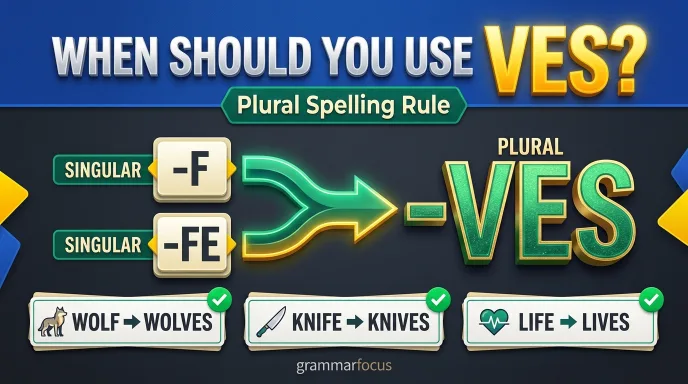
In these words, the spelling changes from f or fe to ves when the plural is formed.
For example:
One leaf is on the ground.
Several leaves are on the ground.
The ending -ves is therefore an important part of many English plural spellings.
What Does Vez Mean?
Vez is not normally used as a standard English spelling for the plural ending -ves.
You may still see vez in specific situations. For example, it can occur in names, usernames, brand names, transliterations, or words from another language.
That does not make it the standard English spelling of ves.
For ordinary English writing, avoid replacing ves with vez.
Example
Incorrect standard-English spelling:
leaf → leavez
Correct spelling:
leaf → leaves
The correct form uses v followed by e and s.
Why Do English Words End in -ves?
English has several nouns that form their plurals in an unusual way. Instead of simply adding -s, some words change their ending.
For example:
leaf → leaves
knife → knives
wolf → wolves
wife → wives
This change developed through the history of English. Older pronunciation and spelling patterns influenced the forms we use today.
The result is a group of common words that use -ves in their plural forms.
This is one reason learners may become confused about ves and vez. The v sound is the same, but the spelling must use v + e + s.
Vez and Ves in Plural Words
The most important point is simple: when an English plural uses the -ves pattern, the spelling is ves, not vez.
Here are some common examples:
| Singular | Plural |
| Leaf | Leaves |
| Knife | Knives |
| Wolf | Wolves |
| Wife | Wives |
| Life | Lives |
| Shelf | Shelves |
| Half | Halves |
| Calf | Calves |
Notice the spelling in each plural:
V + E + S
Never change the final s to z.
For example:
❌ loaf → loafz
✅ loaf → loaves
❌ half → halfz
✅ half → halves
When Should You Use Ves?
Use ves when it is part of the standard spelling of an English word.
For example:
The leaves are falling from the trees.
She bought several knives for the kitchen.
The farmer keeps several calves on the farm.
The old wolves moved through the forest.
In each case, -ves is part of the correct plural spelling.
This pattern is common enough to remember through examples. Learning the most frequently used -ves words can make spelling much easier.
Easy Memory Tip
Remember:
VES ends with S.
Think of:
leaves, knives, wolves, wives
They all end in -ves, not -vez.
If you are writing a standard English plural, keep the final s.
British English vs American English
British and American English use the same spelling for the common -ves plural forms.
For example:
| Word | British English | American English |
| Leaf | leaves | leaves |
| Knife | knives | knives |
| Wolf | wolves | wolves |
| Wife | wives | wives |
| Life | lives | lives |
| Shelf | shelves | shelves |
There is no standard British American spelling difference between ves and vez in these words.
The correct spelling remains -ves in both varieties of English.
Which Spelling Should You Use?
For standard English writing, use ves when it belongs to the correct spelling of a word.
Use forms such as:
- leaves
- knives
- wolves
- wives
- lives
- shelves
- halves
- calves
Do not change the final s to z simply because the ending may sound like a z sound when spoken.
The spelling vez may have other uses outside standard English, but it should not be used as a replacement for ves in ordinary English words.
Pronunciation and Word Form
The spelling ves is usually pronounced as part of a complete word, so its sound can vary depending on the word.
For example:
- leaves → /liːvz/
- knives → /naɪvz/
- wolves → /wʊlvz/
- wives → /waɪvz/
- lives → /laɪvz/
The final s in these words often has a /z/ sound. This is one reason people sometimes write vez instead of ves.
However, pronunciation does not change the spelling.
Correct: leaves
Incorrect: leavez
The spelling remains -ves, even when the ending sounds like /z/.
Vez or Ves in Everyday Writing
The -ves ending appears in many common words, so you are likely to use it in everyday writing.
Leaves
The leaves are turning yellow.
Knives
Please put the knives on the table.
Wolves
The wolves live in the forest.
Wives
The two men brought their wives to the dinner.
Lives
The rescue team saved several lives.
Shelves
The books are arranged on the shelves.
These examples show why the correct spelling matters. The final s belongs to the spelling of the plural form.
Words That Change to -ves
Not every English word ending in f or fe changes to -ves. Some simply take -s.
For example:
- roof → roofs
- belief → beliefs
- chef → chefs
- chief → chiefs
- safe → safes
This means you should learn the common -ves words rather than applying the pattern to every word ending in f or fe.
Some common words that do change to -ves include:
- leaf → leaves
- knife → knives
- wife → wives
- life → lives
- wolf → wolves
- shelf → shelves
- half → halves
- calf → calves
- loaf → loaves
- thief → thieves
- self → selves
- scarf → scarves
There are also words with more than one accepted plural form in some varieties or contexts, so individual words should be checked when you are unsure.
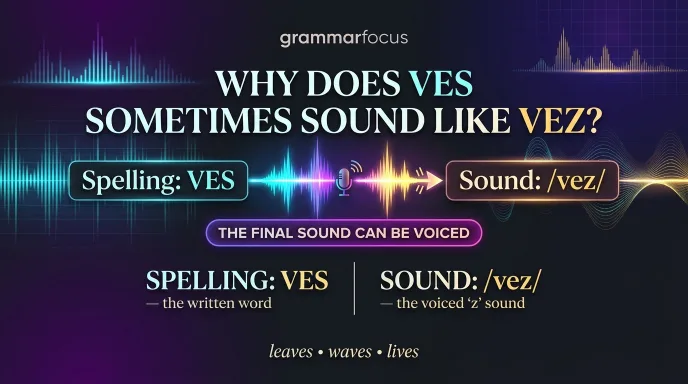
Why Does Ves Sometimes Sound Like Vez?
This is mainly a pronunciation issue.
In words such as leaves, the final s is pronounced like z:
leaves → /liːvz/
The same happens in:
knives → /naɪvz/
wives → /waɪvz/
Because the sound is similar to z, it may feel natural to spell the ending as -vez.
English spelling does not always follow pronunciation letter by letter. The correct written form remains -ves.
A useful rule is:
Hear the /z/ sound, but write the S.
This simple reminder can help prevent the mistake.
Common Mistakes With Vez and Ves
Incorrect: Leavez
The leavez are falling.
Correct: Leaves
The leaves are falling.
Incorrect: Knivez
Put the knivez away.
Correct: Knives
Put the knives away.
Incorrect: Wolvez
The wolvez were moving together.
Correct: Wolves
The wolves were moving together.
Incorrect: Wivez
Their wivez attended the event.
Correct: Wives
Their wives attended the event.
The mistake in each example comes from spelling the final sound instead of following the standard spelling.
How to Remember Ves
The easiest memory trick is:
VES = V + E + S
The last letter is always S.
Think of these four familiar words:
leaves
knives
wolves
lives
They all finish with -ves.
Even if the final sound resembles z, do not change the spelling.
Another useful reminder is:
Write what English spells, not what the ending sounds like.
This is especially helpful with words such as leaves and knives.
Frequently Asked Questions About Vez or Ves
Q1. Is vez or ves correct?
Answer. Ves is the standard spelling when it forms part of an English word or plural ending. Vez is not the normal English spelling for this pattern.
Q2. Why do people spell ves as vez?
Answer. The final s in words such as leaves and knives is pronounced with a /z/ sound. This can make vez look like a possible spelling, but the correct spelling still uses s.
Q3. Is leaves spelled leaves or leavez?
Answer. The correct spelling is leaves. The final letter is s, even though the ending is pronounced /z/.
Q4. Is knives spelled knives or knivez?
Answer. Knives is correct. Knivez is an incorrect spelling.
Q5. Do British and American English use ves?
Answer. Yes. Both British and American English use standard -ves spellings in words such as leaves, knives, wolves, and wives.
Q6. Do all words ending in f change to ves?
Answer. No. Some words simply add -s, such as roofs, chefs, and beliefs. The -ves pattern applies to specific words.
Q7. What words use the ves ending?
Answer. Common examples include leaves, knives, wolves, wives, lives, shelves, halves, calves, loaves, and thieves.
Q8. How can I remember the spelling of ves?
Answer. Remember V + E + S. Even when the final s sounds like z, the spelling remains -ves.
Key Takeaway
Ves is the correct spelling used in many common English plural forms. Vez is not the standard spelling for these English endings.
The main reason for the confusion is pronunciation. In words such as leaves, knives, wolves, and wives, the final s can sound like z.
Remember:
Sound: /z/
Spelling: s
So write leaves, not leavez, and knives, not knivez.
Conclusion
The difference between vez and ves becomes easy once you separate pronunciation from spelling. In standard English words, the correct ending is -ves, even when the final s sounds like /z/.
Use ves in words such as leaves, knives, wolves, wives, lives, and shelves. Avoid changing the final s to z. A simple rule will help you remember it: hear the z sound, but write the S.
Learn More About Grammar:
- Instill or Instil: Which Is Correct? US vs. UK Spelling 2026
- Grill or Griddle: What’s the Difference?
- Fillet or Filet: Meaning, Usage, and Spelling

I’m Alex Morgan, an American English writer with 6 years of experience exploring grammar, punctuation, sentence structure, and everyday English usage. I enjoy turning confusing grammar rules into clear, practical explanations that help readers write and communicate with confidence.








2 thoughts on “Vez or Ves: Which One Is Correct? Meaning, and Spelling in 2026 ”