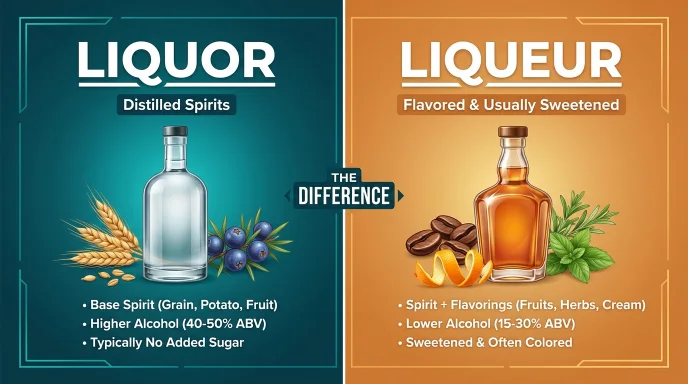
The words liquor or liqueur can confuse even confident English speakers. They look almost the same, sound similar, and both refer to alcoholic drinks. However, they have different meanings, and choosing the right word helps you describe a drink clearly.
Liquor usually means a strong distilled alcoholic drink, such as vodka, whiskey, rum, or gin. Liqueur is a flavored, usually sweetened alcoholic drink made with ingredients such as fruit, herbs, spices, coffee, or nuts. Examples include coffee liqueur and orange liqueur.
People often search for these terms when reading a cocktail recipe, ordering a drink, writing a menu, or learning English vocabulary. The extra letters in liqueur can also make its spelling harder to remember.
This guide explains the difference between liquor and liqueur, their meanings, origins, and regional usage. You will also find practical examples, common spelling mistakes, and simple tips to help you choose the correct word.
Liquor or Liqueur: The Difference Made Simple
Liquor is a general term for strong distilled alcoholic drinks, while liqueur refers to a flavored, usually sweetened alcoholic drink. Whiskey, vodka, and gin are examples of liquor. Amaretto, crème de menthe, and coffee liqueur are examples of liqueurs.
The key difference is that liqueurs are typically sweetened and flavored, while liquor is the broader category.
Liquor or Liqueur: Quick Answer
The main difference between liquor and liqueur is their typical flavor and composition.
- Liquor: A distilled alcoholic drink, such as rum, tequila, gin, or whiskey.
- Liqueur: A flavored and usually sweetened alcoholic drink, such as Irish cream, coffee liqueur, or orange liqueur.
Here are three simple examples:
- A bartender uses vodka, a liquor, to make a cocktail.
- A recipe calls for coffee liqueur to add a sweet coffee flavor.
- Orange liqueur adds sweetness and citrus flavor to a mixed drink.
Memory tip: Liquor is the broader category. Liqueur is usually the sweeter, flavored option.
What Does Liquor or Liqueur Mean?
What Does Liquor Mean?
Liquor is a distilled alcoholic beverage. It is also commonly called spirits.
Common types of liquor include:
- Vodka: Usually has a neutral flavor.
- Whiskey: Often has notes of grain, wood, or smoke.
- Rum: Made from sugarcane products.
- Gin: Known for its juniper flavor.
- Tequila: Made from blue agave.
- Brandy: Produced by distilling wine or other fermented fruit products.
Liquor is often used as the base for cocktails. It may also be served on its own or with a mixer. For example, a classic martini commonly uses gin or vodka. Neither drink needs a sweet liqueur to qualify as a cocktail.
What Does Liqueur Mean?
A liqueur is an alcoholic drink that is typically sweetened and flavored with ingredients such as fruit, herbs, spices, nuts, coffee, chocolate, or cream.
Popular examples include:
- Amaretto: A sweet drink with an almond like flavor.
- Coffee liqueur: A sweetened drink flavored with coffee.
- Orange liqueur: A citrus flavored drink used in many cocktails.
- Crème de menthe: A sweet mint flavored liqueur.
- Irish cream liqueur: A creamy drink made with Irish whiskey and cream.
Liqueurs are often used in cocktails, desserts, and specialty coffee drinks. They can also be served in small portions after a meal.
Are Liquor and Liqueur Interchangeable?
No. The words describe different categories of drinks, so replacing one with the other can change a recipe’s flavor.
For example, vodka provides a strong spirit base without the sweetness of most liqueurs. Coffee liqueur adds both alcohol and a sweet coffee flavor.
The easiest rule is to check the recipe or drink label. If it calls for a specific liqueur, using an unflavored liquor may produce a very different result.
The Origin of Liquor or Liqueur
Where Does the Word Liquor Come From?
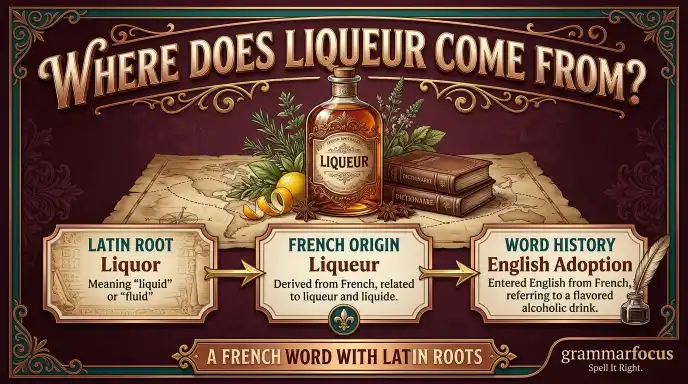
The word liquor comes from the Latin liquor, meaning liquid or fluid. It entered English through historical developments in French and other European languages.
Over time, the word became associated with alcoholic liquids, especially distilled spirits. In modern English, it commonly refers to drinks such as whiskey, vodka, rum, and gin.
The word has also appeared in broader historical and technical contexts involving liquids. However, its everyday use today is strongly connected with alcoholic beverages.
Where Does the Word Liqueur Come From?
The word liqueur comes from French, which developed it from forms related to the Latin word liquor. Its history is connected with liquids and the preparation of flavored alcoholic drinks.
As these drinks became established in European food and drinking traditions, the French spelling liqueur entered English. Today, the spelling helps distinguish a flavored, usually sweetened alcoholic beverage from the broader category of liquor.
Why Are the Spellings So Similar?
Both words have related linguistic histories. Their similar spellings reflect that connection, but their modern meanings have developed differently.
Remember these forms:
- Liquor: The broader term for distilled spirits.
- Liqueur: A flavored, usually sweetened alcoholic drink.
The difference is not just spelling. It also affects the meaning of a sentence, cocktail recipe, or product description.
British English vs American English
The distinction between liquor and liqueur is mainly about meaning, not a British versus American spelling difference. Both words are used in British and American English.
| British English | American English | Example |
| Liquor | Liquor | The recipe calls for rum. |
| Liqueur | Liqueur | Add coffee liqueur to the mixture. |
| Spirits | Liquor or spirits | The shop sells a range of spirits. |
| Liqueur | Liqueur | Orange liqueur adds a citrus flavor. |
Regional Differences in Usage
In the United States, liquor is widely used for distilled alcoholic drinks. The term also appears in phrases such as liquor store.
In the United Kingdom, spirits is common when referring to distilled alcoholic beverages. However, liquor is understood, and liqueur has the same basic meaning as it does in American English.
In both regions, liqueur refers to the flavored, usually sweetened category. The spelling does not change between the two varieties of English.
What About Canada and Australia?
Canadian English uses both liquor and liqueur, with context determining the meaning. Australian English also uses both terms and commonly uses spirits as a general category for distilled alcoholic drinks.
For international readers, the safest choice is to use the exact term shown on a product label or in a reliable recipe.
Which Version Should You Use?
Choose the word that matches the drink you mean. The country or writing style rarely changes the basic distinction.
- United States: Use liquor for distilled spirits and liqueur for sweetened, flavored spirits.
- United Kingdom: Both terms are correct. Spirits is also common for distilled drinks.
- Canada: Use liquor and liqueur according to their meanings.
- Australia: Both words are understood and used in the same general way.
- International writing: Name the specific drink when possible, such as vodka or coffee liqueur.
- Academic writing: Define each term clearly when discussing alcohol, food, or beverage categories.
- Business writing: Follow the product label and use consistent terminology in menus, product descriptions, and reports.
Best advice: Do not choose between these words based on regional spelling. Choose based on the drink’s type and meaning.
Common Mistakes
Mistake 1: Using Liquor When You Mean Liqueur
Incorrect: The dessert recipe needs coffee liquor.
Correct: The dessert recipe needs coffee liqueur.
Why: The intended ingredient is a sweetened, coffee flavored alcoholic drink.
Mistake 2: Treating Every Liquor as a Liqueur
Incorrect: Vodka is a liqueur.
Correct: Vodka is a liquor.
Why: Vodka is a distilled spirit, but it is not usually classified as a liqueur.
Mistake 3: Assuming the Words Have Different Regional Spellings
Incorrect: Liquor is American, while liqueur is British.
Correct: Both words are used in British and American English, but their meanings differ.
Why: This is a difference in meaning, not a spelling variation between countries.
Mistake 4: Thinking Every Liqueur Has the Same Sweetness
Incorrect: All liqueurs taste equally sweet.
Correct: Liqueurs vary in sweetness, flavor, and texture.
Why: Their ingredients and production methods differ. Some are creamy, while others have herbal, fruity, or bitter notes.
Easy Memory Tip
Think of liqueur as the flavored, usually sweetened drink. The longer spelling can remind you that it is a more specific category. Liquor is the broader term.
Everyday Examples
Here are practical examples showing how to use both words correctly.
Emails
- “Please confirm that the menu lists coffee liqueur as an ingredient.”
- “The supplier sent the updated list of liquor products.”
Business Writing
- “The restaurant added two new liqueurs to its dessert menu.”
- “The retailer updated its inventory of distilled liquor.”
News Headlines
- “New Rules Affect Liquor Sales in the Region”
- “Local Distillery Introduces a New Orange Liqueur”
Blogs
- “Vodka is a popular liquor used in many cocktail recipes.”
- “Coffee liqueur adds a rich flavor to some desserts.”
Social Media
- “This recipe uses orange liqueur for a citrus note.”
- “The guide explains the difference between liquor and liqueur.”
Academic Writing
- “The study examined consumer preferences for different categories of distilled spirits.”
- “The product analysis included sweetened, flavored beverages classified as liqueurs.”
Daily Conversation
- “Does this recipe call for vodka or coffee liqueur?”
- “The shop has several types of liquor.”
Notice the pattern: Liquor names the broader drink category, while liqueur identifies a particular kind of flavored alcoholic beverage.
Google Trends & Modern Usage
People search for liquor or liqueur because the words look alike but describe different types of alcoholic drinks. Cocktail recipes, restaurant menus, product labels, and English lessons are common contexts for this confusion.
The terms also appear in different regional contexts. Liquor is especially common in North American English when referring to strong alcoholic drinks, while spirits is widely used in British English. Liqueur retains its specific meaning across these regions.
No verified search volume comparison is included here, so it would be misleading to claim that one term is gaining popularity or has more searches in a particular country. Google Trends can compare search interest by region and time, but its figures are relative, not total search counts.
For writers, the practical lesson is simple: use the word that matches the intended drink. Readers searching for a cocktail ingredient need a clear definition, not just a spelling comparison.
Liquor and Liqueur: Quick Comparison Table
| Version | Meaning | Correct? | Region | Example |
| Liquor | General term for distilled spirits | Yes | US, UK, Canada, Australia | Vodka is a liquor. |
| Liqueur | Usually sweetened, flavored alcoholic drink | Yes | US, UK, Canada, Australia | Coffee liqueur adds sweetness. |
| Liquor | Used to describe a sweet coffee flavored drink specifically | Usually not the intended term | All regions | Use coffee liqueur for clarity. |
| Liqueur | Used as the general name for all distilled spirits | No, in the usual distinction | All regions | Use liquor or spirits. |
Remember: Both spellings are correct English words. The correct choice depends on the meaning.
Liquor vs Liqueur: Key Takeaways
- Liquor is a broad term for distilled alcoholic drinks.
- Liqueur is typically sweetened and flavored.
- Vodka, gin, rum, and whiskey are common examples of liquor.
- Coffee liqueur, amaretto, and orange liqueur are common examples of liqueurs.
- The words are used in both British and American English.
- Spirits is another common term for distilled alcoholic drinks.
- Check the ingredient list when choosing a drink for a recipe.
- Use liquor for the broad category and liqueur for the flavored, usually sweetened drink.
FAQs About Liquor or Liqueur
Q1. What Is the Main Difference Between Liquor and Liqueur?
Answer. Liquor is a broad term for distilled alcoholic drinks such as vodka, gin, rum, and whiskey. Liqueur is a flavored, usually sweetened alcoholic drink. Coffee liqueur and orange liqueur are examples. The main distinction is the type of drink, not a difference between American and British spelling.
Q2. Is Vodka a Liquor or a Liqueur?
Answer. Vodka is a liquor because it is a distilled spirit. Standard vodka is not normally classified as a liqueur. However, flavored vodka products can have added ingredients or sweetness, so check the product label rather than assuming every flavored spirit is a liqueur.
Q3. Is Baileys a Liquor or a Liqueur?
Answer. Baileys Irish Cream is generally classified as a cream liqueur. It combines Irish whiskey with cream and other flavoring ingredients. Its creamy texture and sweet flavor distinguish it from plain whiskey, which is a type of liquor.
Q4. Is Whiskey a Liquor or a Liqueur?
Answer. Whiskey is a liquor, specifically a distilled spirit made from fermented grain mash. Traditional whiskey is not a liqueur. Some whiskey based products may be sweetened and flavored, so their classification depends on the product itself.
Q5. Is Liqueur Always Sweet?
Answer. Liqueurs are generally sweetened and flavored, but their sweetness can vary. Some have strong herbal, bitter, citrus, or spice notes. The word liqueur describes a category of flavored alcoholic drinks, not one fixed taste or level of sweetness.
Q6. Are Liquor and Liqueur Pronounced the Same Way?
Answer. No. In common US pronunciation, liquor sounds roughly like “LIK er,” while liqueur is often pronounced “li KUR” or “li KYOOR,” depending on the speaker. Pronunciation varies by accent, but the words have distinct spellings and meanings.
Q7. Is Liqueur the British Spelling of Liquor?
Answer. No. Liqueur is not simply the British spelling of liquor. Both words are used in British and American English. Liquor usually refers to distilled spirits, while liqueur refers to a flavored, usually sweetened alcoholic drink.
Q8. Can I Use Liquor Instead of Liqueur in a Recipe?
Answer. Not always. Liquor such as vodka provides a spirit base, while a liqueur also adds sweetness and flavor. Replacing coffee liqueur with plain vodka, for example, can change the taste and balance of a dessert or cocktail. Follow the recipe or choose a suitable substitute.
Conclusion
Understanding liquor or liqueur is easy once you know what each word means. Liquor is the broader term for distilled alcoholic drinks, including vodka, gin, rum, and whiskey. Liqueur refers to a flavored, usually sweetened alcoholic drink, such as coffee liqueur or amaretto.
Both words are correct in British and American English. The difference is not regional spelling. It is the type of drink you are describing.
When writing a recipe, menu, product description, or educational article, choose the word that gives readers the clearest meaning. If a recipe calls for a liqueur, remember that its sweetness and flavor may be important to the result.
The simplest rule to remember is this: liquor is the broader category, while liqueur is the flavored, usually sweetened variety. Keep this distinction in mind, and you can use both words confidently.
If you enjoy learning the differences between commonly confused English words, explore more practical grammar guides to strengthen your vocabulary and writing.
Learn More About Grammar:
- Lamb or Goat? Which One Tastes Better and Cooks Easier (2026)
- Here or There: Which Word Should You Use? (2026)
- Sword or Shield: What Sets These Two Apart?

I’m Elena Cooper, an English grammar writer with 6 years of experience explaining grammar, punctuation, sentence structure, word usage, and common English mistakes. I create clear, practical, and easy-to-follow content that helps readers understand confusing grammar rules and use English accurately and confidently.






1 thought on “Liquor or Liqueur: Meaning, Differences, and Examples”