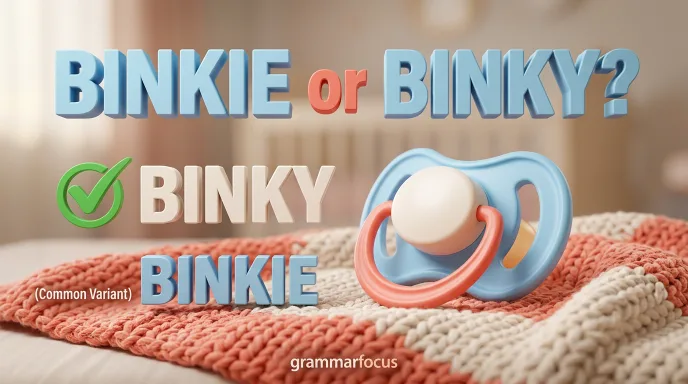
Binkie or Binky are two spellings for a baby’s pacifier or a child’s comfort object. Binky is the more common spelling, especially in American English, while binkie is also used as a variant.
Both words have the same meaning and are usually pronounced the same way. The main difference is spelling preference and usage.
For a baby’s pacifier, binky is generally the more familiar choice. This guide explains the meanings, usage, pronunciation, and common differences between binkie or binky.
Binkie or Binky: Quick Answer
Binky and binkie are both used in English, but binky is the more common spelling for a baby’s pacifier.
- Binky common informal term for a pacifier.
- Binkie variant spelling, also used for a pacifier or comfort object.
- Both can be pronounced similarly.
- Neither spelling is normally used in formal writing.
Example
The baby dropped her binky on the floor.
You may also see:
The baby dropped her binkie on the floor.
The first version is generally more familiar in American English.
Quick Comparison: Binkie vs Binky
| Feature | Binkie | Binky |
| Common use | Variant spelling | More common spelling |
| Meaning | Pacifier or comfort object | Pacifier or comfort object |
| Part of speech | Noun | Noun |
| Style | Informal | Informal |
| Pronunciation | Usually similar | Usually similar |
| Formal writing | Rare | Rare |
The main difference is the spelling of the ending: -ie versus -y.
Pronunciation and Word Form
Binky
- US IPA: /ˈbɪŋki/
- UK IPA: /ˈbɪŋki/
- Part of speech: Noun
- Meaning: An informal word for a pacifier or comfort object
Example:
The baby cannot sleep without her binky.
Binkie
- US IPA: /ˈbɪŋki/
- UK IPA: /ˈbɪŋki/
- Part of speech: Noun
- Meaning: A variant spelling for a pacifier or comfort object
Example:
He carried his favorite binkie everywhere.
The two spellings are generally pronounced the same way. The difference is mainly visual.
Definition and Meaning of Binky
Binky is an informal noun commonly used for a pacifier, especially in American English.
A pacifier is a small rubber, silicone, or plastic object designed for a baby to suck on. Parents may use one to help soothe a baby.
For example:
The baby wants her binky before bedtime.
The word can also have a broader informal meaning. Some families use binky as a personal name for a child’s favorite comfort object, even when that object is not technically a pacifier.
For example:
Her binky is a small blue blanket.
In this context, binky is being used as a familiar or family-specific name for a comfort item.
Because the word is informal, its exact meaning can depend on the family, region, and context.
What Does Binkie Mean?
Binkie is a variant spelling of binky. It can refer to a pacifier or, in some family contexts, a child’s comfort object.
For example:
Where is the baby’s binkie?
The spelling with -ie can look more like a traditional nickname. English frequently uses -ie endings in informal words and names, such as doggie, kitty, and birdie.
However, spelling preferences vary. Some families may prefer binkie, while others naturally write binky.
If you want the spelling most commonly recognized for a pacifier, binky is a practical choice.
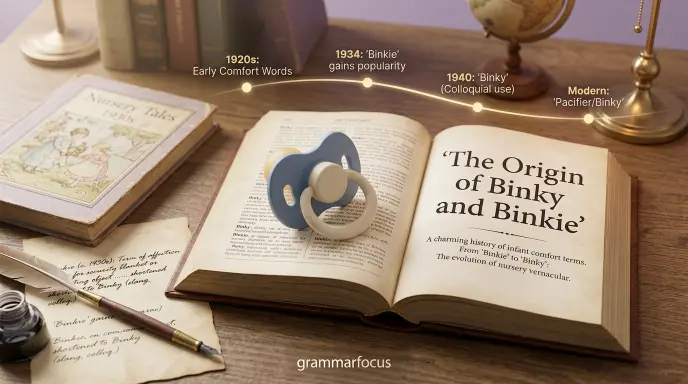
The Origin of Binky and Binkie
The exact origin of binky as a nickname for a pacifier is not completely clear. It belongs to a group of informal, child friendly words that developed through everyday speech.
English has many words created or popularized through children’s language and family usage. These words can become widely recognized even when they do not have a precise formal origin.
Binky appears to have developed as an affectionate term for a baby’s comfort object or pacifier. The spelling binkie likely reflects the common English tendency to use -ie in informal or diminutive forms.
Unlike a technical medical term, binky is casual vocabulary. It is most natural in conversations, parenting content, children’s books, and informal writing.
Binky as a Pacifier
The most common modern use of binky is as an informal name for a pacifier.
Examples
- The baby dropped her binky.
- Please wash the binky before giving it back.
- We forgot the baby’s binky at home.
- He reached for his binky before falling asleep.
In these sentences, binky simply refers to the baby’s pacifier.
You may also see phrases such as:
binky clip an item used to help keep a pacifier nearby.
binky holder a small holder or container for a pacifier.
These expressions are informal and are especially common in parenting-related content.
Binky as a Comfort Object
In some families, binky does not specifically mean a pacifier. It can be a personal name for a child’s favorite comfort item.
For example:
Her binky is the soft blanket she received as a newborn.
Here, binky could refer to a blanket rather than a pacifier.
This use is highly personal. The meaning should be clear from the surrounding context.
If a reader might misunderstand the word, use the specific noun instead. For example, pacifier, blanket, or toy is clearer in formal writing.
Binkie or Binky in Everyday English
Both binky and binkie can appear in casual conversations, parenting discussions, and family writing. The spelling often depends on personal preference.
Parenting
I need to find the baby’s binky.
Family Conversations
Did you pack her binkie for the trip?
Children’s Writing
The little girl hugged her binky before going to sleep.
Because these words are informal, there is no need to use them in formal documents. In professional writing, pacifier is usually clearer.
Binky vs Pacifier
Binky and pacifier can refer to the same object, but they are not used in exactly the same way.
Pacifier is the standard general term. It is suitable for formal, medical, product, and informational writing.
Binky is informal and familiar. It is more common in conversations with children or parents.
Compare these examples:
The pediatrician discussed proper pacifier use.
The baby dropped her binky.
The first sentence has a formal tone. The second sounds natural in everyday family conversation.
Common Mistakes With Binkie and Binky
One common mistake is assuming that binkie and binky must have completely different meanings. In many contexts, they refer to the same type of comfort object.
Another mistake is using binky in formal writing when pacifier would be clearer.
For example:
❌ The infant was given a binky during the medical procedure.
✅ The infant was given a pacifier during the medical procedure.
The second sentence is more appropriate for formal or clinical writing.
A third mistake is treating binkie as an entirely incorrect spelling. It is used as a variant, so context matters.
When Should You Use Binky?
Use binky when you want an informal, familiar term for a baby’s pacifier or comfort object.
It works well in:
- Parenting blogs
- Family conversations
- Children’s stories
- Informal social media posts
- Casual messages
Examples
Where did you put the baby’s binky?
She cannot sleep without her binky.
We brought an extra binky for the trip.
If you are writing for a broad audience and want the most recognizable informal form, binky is generally the safer choice.
When Should You Use Binkie?
Use binkie when that spelling matches your preferred style or the wording used by a particular family, character, or audience.
For example:
Her favorite binkie is the one with the pink handle.
This spelling is perfectly understandable in informal contexts.
However, if you are creating general informational content, binky may be easier for readers to recognize.
Binkie or Binky: Which Spelling Should You Use?
For an informal word meaning a baby’s pacifier, binky is generally the more familiar spelling.
Binkie is also used as a variant, especially in family and child focused contexts.
Use binky when you want a simple, widely recognizable informal term. Use binkie if it matches a person’s established spelling preference or a specific style.
For formal writing, neither is usually necessary. Choose pacifier when you want the clearest standard term.
Frequently Asked Questions
Q1. Is binky a real word?
Answer. Yes. Binky is an informal word commonly used for a baby’s pacifier and, in some families, a comfort object.
Q2. Is binkie or binky more common?
Answer. Binky is generally the more familiar spelling for a pacifier, while binkie is used as a variant.
Q3. What does binky mean?
Answer. Binky commonly means a pacifier. Some families also use it as a name for a child’s favorite comfort object.
Q4. Is binkie a misspelling of binky?
Answer. Not necessarily. Binkie is used as a variant spelling in informal English, although binky is generally more familiar.
Q5. Is binky the same as a pacifier?
Answer. Usually, yes. In American informal English, binky commonly refers to a baby’s pacifier.
Q6. Should I use binky in formal writing?
Answer. Usually no. Pacifier is clearer and more appropriate for formal, medical, academic, and professional writing.
Q7. How do you pronounce binky?
Answer. Binky is commonly pronounced /ˈbɪŋki/, with the first syllable sounding like “bing” and the second like “kee.”
Q8. Can binky refer to a blanket?
Answer. Yes, in some families. Binky can be a personal name for a child’s comfort object, including a blanket, although its common general meaning is a pacifier.
Conclusion: Binkie or Binky
Binky is the more common informal spelling for a baby’s pacifier, while binkie is also used as a variant. Both forms can appear in casual family and parenting contexts.
For general informal writing, binky is a simple and familiar choice. For formal writing, pacifier is usually the clearest word.
The key point is that binkie and binky are closely related spellings, not words with completely different meanings.
Learn More About Grammar:
- Why Americans Write “Focused” and Brits Write “Focussed”
- Empower or Enpower: Only One Is a Real Word
- Crummy or Crumby? The Truth Behind These Two Words

I’m Alex Morgan, an American English writer with 6 years of experience exploring grammar, punctuation, sentence structure, and everyday English usage. I enjoy turning confusing grammar rules into clear, practical explanations that help readers write and communicate with confidence.