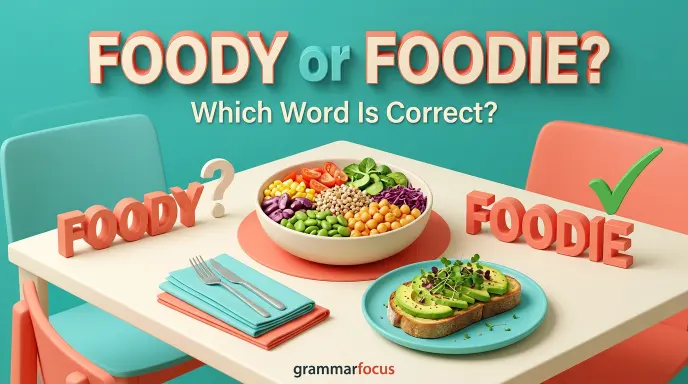
Foody or foodie can be confusing because both words are connected with food, but foodie is the standard and much more common word in modern English. A foodie is someone who has a strong interest in food, cooking, restaurants, or trying different dishes.
Foody is sometimes used informally, but it is less common and may look like a spelling mistake to many readers.
If you want to describe someone who genuinely loves exploring food, foodie is usually the natural choice.
Foody or Foodie: Quick Answer
Foodie is the standard and widely used word for a person who loves or takes a strong interest in food.
Foody is much less common. It may appear in informal writing or as part of a name or brand, but it is not normally the preferred spelling when you mean a person who enjoys food.
Examples
- My sister is a real foodie.
- He loves trying new restaurants because he is a foodie.
- We planned a foodie trip around the city.
A natural sentence would be:
She is a foodie who enjoys exploring different cuisines.
In most ordinary situations, choose foodie when referring to a person with a strong interest in food.
Foody vs Foodie: Quick Comparison
| Feature | Foody | Foodie |
| Common meaning | Informal or context-dependent | Person interested in food |
| Standard choice for a food lover | Usually no | Yes |
| Common in everyday English | Less common | Very common |
| Word form | Adjective/noun in some informal uses | Noun |
| Example | A less common informal form | She is a foodie. |
| Best choice for general writing | Usually avoid unless intended | Recommended for this meaning |
The important point is that foodie has a clear, established meaning in modern English. Foody does not normally serve as its direct replacement.
Pronunciation and Word Form
Foody
- US pronunciation: /ˈfuːdi/
- UK pronunciation: /ˈfuːdi/
- Word form: Informal adjective or noun, depending on context
Example:
The restaurant has a foody atmosphere.
However, this use is less established than foodie, and the intended meaning can depend on the context.
Foodie
- US pronunciation: /ˈfuːdi/
- UK pronunciation: /ˈfuːdi/
- Word form: Noun
Example:
Maria is a foodie who loves discovering local restaurants.
The two words are pronounced the same in many varieties of English, which can make the spelling difference harder to notice in speech.
Definition and Meaning of Foodie
A foodie is a person who has a strong interest in food. A foodie may enjoy eating, cooking, learning about ingredients, visiting restaurants, or exploring different cuisines.
The word is informal and friendly. It is common in conversations, blogs, restaurant reviews, social media, travel writing, and lifestyle content.
For example:
- I am a foodie, so I always look for local restaurants when I travel.
- He became a foodie after learning how to cook.
- The city is perfect for foodies.
Being a foodie does not simply mean that someone likes eating. The word often suggests a deeper interest in food and the experiences surrounding it.
A foodie might care about how a dish is prepared, where its ingredients come from, or which restaurant serves a particular specialty.
What Does Foody Mean?
Foody is a less common form and does not have the same clear, standard meaning as foodie.
It can sometimes be used informally to describe something related to food or someone who is particularly interested in food.
However, many readers may interpret foody as a misspelling of foodie when it is used to describe a person.
For example:
Less natural:
He is a foody who loves Italian food.
Natural:
He is a foodie who loves Italian food.
In the second sentence, the intended meaning is immediately clear.
The word foody may also appear in brand names, business names, social media usernames, or creative expressions. In those cases, it may be an intentional spelling rather than a mistake.
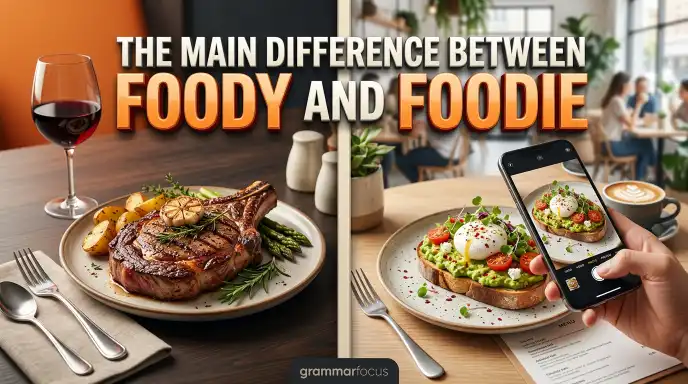
The Main Difference Between Foody and Foodie
The main difference is usage and meaning.
Foodie is an established informal noun that refers to someone who has a strong interest in food.
Foody is less common and does not normally function as the standard noun for such a person.
Compare these sentences:
- She is a foodie who enjoys trying new dishes.
- She is a foody who enjoys trying new dishes.
The first sentence sounds natural to most English speakers. The second may be understood, but many readers may consider it an unusual spelling.
Therefore, if your intended meaning is “a person who loves or is very interested in food,” use foodie.
When Should You Use Foodie?
Use foodie when talking about someone who has a strong interest in food, restaurants, cooking, or different cuisines.
It works especially well in informal and lifestyle-related contexts.
Food and Restaurants
My brother is a foodie who knows all the best restaurants in town.
Travel
We are foodies, so local cuisine is an important part of our trips.
Cooking
She became a foodie after discovering her passion for cooking.
Social Media
Follow our page for restaurant recommendations and foodie guides.
The word is flexible and can describe both casual food lovers and people who take a serious interest in culinary experiences.
Foodie in Different Contexts
Restaurant Reviews
Foodie is common in restaurant and dining content.
This neighborhood is a great destination for foodies.
It can describe people who actively seek interesting dining experiences.
Travel Writing
Travel writers often use foodie when discussing local dishes and culinary experiences.
Foodies should try the city’s traditional street food.
Social Media
The word is especially common in informal online content.
Examples include:
- foodie life
- foodie guide
- foodie trip
- foodie favorite
These expressions are generally casual rather than formal.
Everyday Conversation
You can naturally say:
Are you a foodie?
or:
She’s a huge foodie.
These sentences sound friendly and conversational.
Common Mistakes With Foody and Foodie
Mistake 1: Using Foody for a Person
A common mistake is writing foody when you mean someone who loves food.
Less standard:
My friend is a foody.
Preferred:
My friend is a foodie.
Mistake 2: Assuming the Spelling Must Match Food
It may seem logical to add -y directly to food and create foody. However, the established noun for a person with a strong interest in food is foodie.
Mistake 3: Treating Every Use of Foody as Wrong
Although foodie is the preferred word for a food enthusiast, foody can appear in informal or creative contexts.
A business or brand may intentionally use Foody as part of its name. In such cases, the spelling should be treated as a proper name rather than automatically corrected.
Foodie vs Food Lover
Foodie and food lover are closely related, but they can have slightly different emphasis.
A food lover simply enjoys food.
A foodie often suggests someone who takes a more active interest in food, such as trying new restaurants, exploring cuisines, learning about cooking, or discussing dishes.
For example:
She is a food lover.
This simply tells us that she likes food.
She is a foodie.
This can suggest a broader interest in food culture and culinary experiences.
Both expressions are natural, but foodie is shorter and more informal.
The Origin of Foodie
The word foodie is a relatively modern informal English term. It developed from food with the addition of the -ie ending, a pattern often used in informal English to create words referring to people or personal characteristics.
The word became increasingly familiar during the late 20th century as interest in restaurants, cooking, specialty foods, and food culture grew.
Today, foodie is widely recognized in everyday English and appears in restaurant writing, travel content, lifestyle media, social media, and casual conversation.
Its informal character is important. In friendly and conversational contexts, foodie works well. However, professional or academic writing may call for a more formal expression, such as food enthusiast.
Foodie and Food Enthusiast
Although foodie and food enthusiast can describe similar people, they differ in their level of formality.
Foodie is short, informal, and conversational.
Food enthusiast sounds more neutral and professional.
Compare:
She is a foodie who loves exploring local restaurants.
She is a food enthusiast with a particular interest in regional cuisine.
Both sentences communicate a strong interest in food. The second expression may fit better in a formal profile, report, or professional publication.
Choosing between them depends mainly on tone rather than a major difference in meaning.
Useful Expressions With Foodie
The word foodie appears in many common expressions.
Foodie Guide
A foodie guide is a guide that focuses on restaurants, dishes, local cuisine, or places to eat.
We created a foodie guide to the city’s best breakfast spots.
Foodie Destination
A foodie destination is a place known for interesting or attractive food experiences.
The coastal town has become a popular foodie destination.
Foodie Culture
Foodie culture refers to the social interest surrounding restaurants, cooking, ingredients, dining experiences, and culinary trends.
Social media has helped expand foodie culture.
Foodie Friend
A foodie friend is simply a friend who has a strong interest in food.
Ask Sarah where to eat she is our resident foodie friend.
These expressions are mostly informal and work particularly well in lifestyle and travel content.
Foodie in Travel Writing
Foodie is especially useful when writing about travel because food is often an important part of experiencing a destination.
For example:
The city is a great choice for foodies who want to explore traditional dishes.
Travel writers may also describe:
- foodie tours
- foodie experiences
- foodie neighborhoods
- foodie markets
- foodie recommendations
These expressions can make travel content sound conversational and approachable.
However, writers should avoid adding foodie to every sentence. Using the word naturally is more effective than repeating it simply for variation or keyword purposes.
Foodie in Social Media and Marketing
The word foodie is common in social media because it has a friendly and recognizable tone.
You may see phrases such as:
- Foodie Friday
- foodie favorites
- foodie finds
- foodie picks
- foodie weekend
Restaurants, food bloggers, travel creators, and lifestyle brands may use these expressions to create an informal tone.
Because foodie is associated with enthusiasm and discovery, it works particularly well in promotional and conversational content.
Still, it is an informal term. A formal business document may need a more neutral expression depending on its purpose and audience.

Foody in Names and Branding
Although foodie is the standard word for a food enthusiast, foody can intentionally appear in names.
For example, a company might choose Foody as part of a brand name, website name, app name, or product label.
In this situation, the unusual spelling does not automatically make the name incorrect. Proper names and trademarks can use creative spellings for branding purposes.
The important distinction is between ordinary vocabulary and an intentional name.
If you are describing a person in normal English, foodie is generally the expected spelling. If Foody is part of an official brand name, preserve the brand’s chosen spelling.
Foodie in Formal and Informal Writing
Foodie is primarily an informal word.
It works naturally in:
- blogs
- social media
- restaurant reviews
- travel articles
- casual emails
- lifestyle content
- everyday conversations
For highly formal writing, alternatives may sound more appropriate.
For example:
Informal:
He is a passionate foodie.
More formal:
He is a passionate food enthusiast.
The choice depends on the audience. There is no need to avoid foodie simply because it is informal; it is a normal and established word in appropriate contexts.
Foodie, Gourmet, and Epicure
These words can overlap, but they are not perfect synonyms.
A foodie is generally someone who takes a strong interest in food.
A gourmet can refer to high-quality or sophisticated food and, in some contexts, a person with refined knowledge or taste in food.
An epicure is a more formal and less common word for someone who takes particular pleasure in fine food and drink.
Therefore, replacing foodie with one of these words can change the tone or emphasis.
For everyday English, foodie is usually the simplest choice when you mean someone who is enthusiastic about food.
How to Remember Foodie
A simple memory trick is:
Food + ie = foodie
Think of the final -ie as part of the established word rather than simply adding -y to food.
So, when you want to describe someone who enjoys exploring food, remember:
Foodie = food enthusiast
This makes it easier to avoid choosing foody simply because it appears to follow the spelling of food + y.
Frequently Asked Questions
Q1. Is foody or foodie correct?
Answer. Foodie is the standard and widely recognized word for a person who has a strong interest in food. Foody is less common and can be context-dependent.
Q2. Is foodie a real English word?
Answer. Yes. Foodie is an established informal English noun used for someone who has a strong interest in food, cooking, restaurants, or different cuisines.
Q3. Is foody a misspelling of foodie?
Answer. It can be an unintended spelling when someone means foodie, but foody can also appear intentionally in informal language, brand names, and creative contexts. The intended context matters.
Q4. What do you call a person who loves food?
Answer. Foodie is a common informal term for a person who has a strong interest in food. Food lover and food enthusiast are also natural alternatives.
Q5. Is foodie formal or informal?
Answer. Foodie is mainly informal. It is common in conversation, blogs, restaurant reviews, travel writing, and social media. More formal writing may use food enthusiast instead.
Q6. Can foody be used as a brand name?
Answer. Yes. A company, website, application, or product can intentionally use Foody as a name. In that situation, its spelling should be preserved as part of the proper name.
Q7. What is the difference between foodie and gourmet?
Answer. Foodie broadly describes someone who is enthusiastic about food. Gourmet can suggest a stronger association with high quality or sophisticated food and culinary taste.
Q8. Is foodie used in British English?
Answer. Yes. Foodie is used in both American and British English and is widely understood in modern English.
Conclusion
When deciding between foody or foodie, foodie is the established choice when you mean a person who has a strong interest in food.
Foody has a much less consistent role in ordinary English. It may appear in informal or creative usage, and it can also be an intentional spelling in a brand or business name.
That does not make it a direct replacement for foodie in standard everyday writing.
Remember the simplest rule:
Foodie = a person interested in food
For restaurant reviews, travel content, social media, and everyday conversation, foodie is a natural and familiar choice.
In more formal contexts, food enthusiast can provide a more professional alternative.
Learn More About Grammar:
- Theaters or Theatres? Why Are Both Spellings Used?
- Revise or Correct: Meaning, Differences & Examples
- Rogue or Rouge? The Spelling Mix Up Finally Explained

I’m Alex Morgan, an American English writer with 6 years of experience exploring grammar, punctuation, sentence structure, and everyday English usage. I enjoy turning confusing grammar rules into clear, practical explanations that help readers write and communicate with confidence.