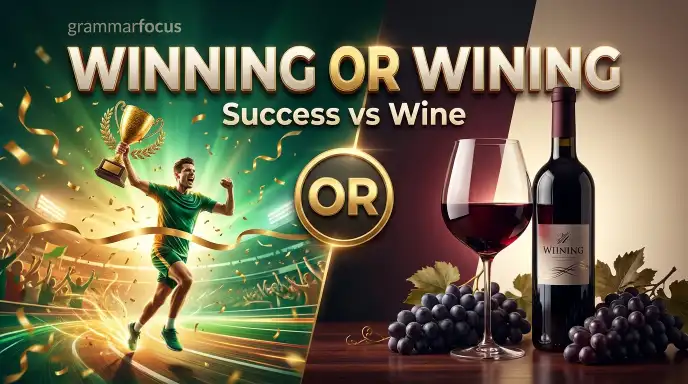
Winning or wining can be confusing because the two spellings look almost identical. The correct form depends on the word you want to use, but winning is the common spelling when you mean achieving success in a contest, game, or competition.
Wining is also a real English word, but it has a different meaning. It is the present participle of wine, meaning to treat someone to wine or to serve wine.
The extra n changes the word and its meaning. This guide explains the difference between winning and wining with simple rules and examples.
Winning or Wining: Quick Answer
Winning is correct when you mean succeeding, coming first, or defeating an opponent.
Wining is correct only when it comes from the verb wine, usually meaning serving or treating someone to wine. This use is uncommon in everyday English.
| Word | Correct Use | Meaning | Example |
| Winning | Common | Succeeding or being victorious | She is winning the race. |
| Wining | Less common | Serving or treating someone to wine | They were wining and dining their guests. |
So, if you are talking about a game, race, prize, competition, or success, use winning.
What Does Winning Mean?
Winning is the present participle of win. It can also work as an adjective or noun in different sentences.The verb win means to achieve victory or success.
For example:
Our team is winning the match.
She is winning the race.
He keeps winning competitions.
In each sentence, winning means achieving or moving toward victory.
Winning as an Adjective
Winning can also describe someone or something that is successful or likely to succeed.
They have a winning strategy.
She has a winning personality.
It can also describe something that is especially attractive or successful.
The company came up with a winning idea.
As a Noun
Winning can refer to the act or result of achieving success.
Winning requires patience and practice.
Here, winning is being used as a noun like form to describe the process of becoming successful.
What Does Wining Mean?
Wining comes from the verb wine.
The verb wine means to entertain or treat someone with wine. It is often found in the expression wine and dine, which means to entertain someone with good food and drinks.
For example:
The company was wining and dining its clients.
However, wining is much less common than winning.
This is why people often think wining is simply a misspelling of winning. In fact, it can be a real word, but it has a different meaning.
Wining in a Sentence
They spent the evening wining and dining their guests.
Here, wining is connected with the verb wine, not win.
For most everyday situations involving success or victory, you need winning, not wining.
Why Is Winning Spelled With Two Ns?
The spelling comes from the way English forms the ing form of certain short verbs.
The base verb is:
win
When ing is added, the final consonant is doubled:
win + ing = winning
The same pattern appears in other short words:
- run → running
- sit → sitting
- stop → stopping
- plan → planning
- swim → swimming
The extra n is therefore important. Writing wining changes the word.
Winning vs Wining
Think of the two forms this way:
win → winning
wine → wining
The base words are different.
Winning comes from win.
Wining comes from wine.
This simple distinction makes the spelling much easier to remember.
The Origin of Winning
The word winning comes from the verb win, which has been part of the English language for many centuries.
The older forms of win were connected with ideas such as gaining, succeeding, obtaining, or achieving something.
Over time, win developed its modern meaning of achieving victory in a competition, contest, or struggle.
The form winning is created by adding ing to win while doubling the final n.Today, it is one of the most common words used to talk about success and victory.

The Origin of Wining
Wining comes from the verb wine.
The verb wine developed from the noun wine, the alcoholic drink made from fermented grapes. As a verb, it came to mean entertaining someone with wine.
The ing form is therefore:
wine → wining
Unlike winning, it does not describe success or victory.
This difference comes directly from the two base words:
win → winning
wine → wining
Winning or Wining: Pronunciation and Word Form
The two words are pronounced differently.
| Word | Pronunciation | Part of Speech | Base Word |
| Winning | /ˈwɪnɪŋ/ | Verb, adjective, noun | win |
| Wining | /ˈwaɪnɪŋ/ | Verb | wine |
Winning sounds like WIN ing.
She is winning the game.
Wining sounds like WINE ing.
They were wining and dining their guests.
The pronunciation can help you remember the difference.
Winning has the short i sound in win.
Wining has the long i sound in wine.
Winning or Wining in British and American English
Both British English and American English use winning and wining with the same basic meanings and spellings.
There is no standard British American spelling difference here.
| English Variety | Winning | Wining |
| British English | Winning | Wining |
| American English | Winning | Wining |
| Canadian English | Winning | Wining |
| Australian English | Winning | Wining |
The important difference is not regional. It is the meaning of the two words.
Which Spelling Should You Use?
Use winning when you are talking about success, victory, or coming out ahead.
Our team is winning.
She is winning the competition.
He has a winning strategy.
Use wining only when you mean the verb wine, usually in a phrase such as wining and dining.
The company was wining and dining its clients.
A simple rule can help:
Win → Winning
Wine → Wining
If you mean victory, choose winning.
If you mean serving or treating someone with wine, choose wining.
Winning or Wining in Everyday English
People use winning more often in everyday English. It describes success in games, competitions, and personal achievements.
Winning a Race
She is winning the race.
Winning a Prize
He is winning a prize for his work.
Winning an Argument
She is good at winning arguments.
Winning Support
Winning can also mean gaining someone’s support or approval.
The campaign is winning public support.
In all these examples, winning comes from the verb win.
Wining and Dining
The word wining is most often seen in the expression wining and dining.
This phrase means entertaining someone with food and wine, often as part of a social or business occasion.
For example:
The company was wining and dining its potential clients.
They spent the evening wining and dining their guests.
The phrase is less common than many everyday uses of winning, so wining can easily look like a spelling mistake.
Remember that the base word here is wine:
wine → wining
Common Mistakes With Winning and Wining
Mistake 1: Using Wining for Success
Incorrect:
Our team is wining the match.
Correct:
Our team is winning the match.
The sentence is about victory, so the base verb is win.
Mistake 2: Forgetting the Double N
Incorrect:
She is wining the race.
Correct:
She is winning the race.
When ing is added to the short verb win, the final n is doubled.
Mistake 3: Using Winning With Wine
Incorrect if you mean serving wine:
They were winning and dining their guests.
Correct:
They were wining and dining their guests.
Here, the base word is wine, so the form is wining.
Mistake 4: Treating the Two Words as Variants
Winning and wining are not two spellings of the same word.
They come from different base words:
win → winning
wine → wining
Their meanings are also different.
Winning or Wining: Easy Spelling Rule
A simple rule can help you choose the right word.

If the base word is Win
Add ing and double the final consonant:
win → winning
Examples:
winning a game
winning a race
If the Base Word Is Wine
Remove the final e and add ing:
wine → wining
Example:
wining and dining
This small difference explains why one form has two n’s and the other does not.
Winning or Wining: Example Sentences
| Meaning | Correct Sentence |
| Victory | The team is winning the match. |
| Competition | She is winning the race. |
| Success | He has a winning attitude. |
| Strategy | They developed a winning plan. |
| Entertaining with wine | The company was wining and dining its clients. |
| Social event | They spent the evening wining and dining their guests. |
The context usually makes the correct spelling clear.
Winning or Wining: Quick Comparison
| Feature | Winning | Wining |
| Base word | Win | Wine |
| Main meaning | Achieving success or victory | Entertaining with wine |
| Common in everyday English | Very common | Less common |
| Pronunciation | /ˈwɪnɪŋ/ | /ˈwaɪnɪŋ/ |
| Example | She is winning. | They are wining and dining guests. |
| Double N | Yes | No |
| Correct spelling | Yes | Yes, in its specific meaning |
Both forms are correctly spelled words, but they cannot be used interchangeably.
How to Remember Winning
The easiest way to remember winning is to connect it with win:
WIN → WINNING
The final n is doubled.
Think of other similar forms:
- run → running
- sit → sitting
- stop → stopping
- win → winning
So if you are talking about victory or success, remember the double n.
Winning = success
How to Remember Wining
For wining, think of the word wine.
WINE → WINING
The final e disappears before ing is added.
The word is mainly useful in the phrase:
wining and dining
So you can remember:
Winning = victory
Wining = wine
This simple association makes the difference easy to recall.
Which Word Is More Common?
Winning is far more common in modern everyday English. It appears in conversations about sports, competitions, business, politics, games, personal achievements, and many other areas.
Wining is much less common. Most people encounter it in the expression wining and dining.
This difference in frequency can also explain why wining may look unusual when you see it by itself.
If you are writing about success or victory, winning is almost certainly the word you need.
Key Takeaway
Winning and wining are both correctly spelled words, but they have different meanings.
Use winning when you mean achieving victory, success, or an advantage.
Use wining when you mean serving or entertaining someone with wine, especially in the phrase wining and dining.
The easiest rule is:
win → winning
wine → wining
If the sentence is about a game, race, competition, or success, use winning.
Frequently Asked Questions
Q1. Is winning or wining correct?
Answer. Both are correct words, but they have different meanings. Winning comes from win and relates to success or victory. Wining comes from wine and relates to entertaining someone with wine.
Q2. Is wining a real word?
Answer. Yes. Wining is the present participle of wine. It is most commonly seen in the phrase wining and dining.
Q3. Is winning spelled with two Ns?
Answer. Yes. The correct spelling is winning with two n’s. It comes from win + ing.
Q4. What is the difference between winning and wining?
Answer. Winning means achieving success or victory. Wining means serving or treating someone with wine. They come from different base words.
Q5. Is it wining and dining or winning and dining?
Answer. The correct phrase is wining and dining. Here, wining comes from the verb wine.
Q6. Why does winning have two Ns?
Answer. The final n of the short verb win is doubled before ing is added. The result is winning.
Q7. How do you spell winning a game?
Answer. The correct spelling is winning. For example: “Our team is winning the game.”
Q8. Is wining common in English?
Answer. Wining is much less common than winning. It is mainly encountered in expressions such as wining and dining.
Conclusion
Winning and wining look similar, but they come from different words. Winning comes from win and means achieving success or victory. Wining comes from wine and refers to entertaining someone with wine.
For most situations involving games, races, competitions, or success, use winning.
The easiest way to remember the difference is simple:
Win → winning
Wine → wining
Once you connect each spelling with its base word, the difference becomes much easier to remember.
Learn More About Grammar:
- Cataloged or Catalogued: Which Is Correct in US and UK English?
- Supersede or Supercede: One Letter, One Common Error
- Shiny or Shiney: Which Is Correct? Spelling Explained in 2026

I’m Alex Morgan, an American English writer with 6 years of experience exploring grammar, punctuation, sentence structure, and everyday English usage. I enjoy turning confusing grammar rules into clear, practical explanations that help readers write and communicate with confidence.








3 thoughts on “Winning or Wining: One Letter That Changes the Meaning”